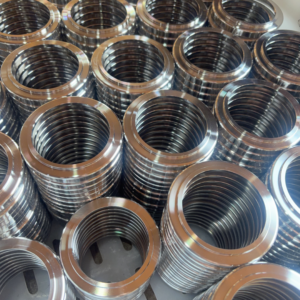
In low-to-medium pressure fluid distribution, pneumatic lines, and mechanical plumbing assemblies, selecting a reliable galvanized pipe adapter requires balancing corrosion resistance with precise dimensional fit. While hot-dip galvanizing suits rough structural piping, precision fluid systems demand tight thread crests and consistent mating surfaces. At Yuhuan Xinghe Machinery Factory, our production floor combines cold heading, hex bar turning, and tightly controlled electro-galvanizing to deliver custom galvanized pipe and fittings that eliminate on-site galling, cross-threading, and micro-leaks under continuous vibration.
This technical guide breaks down the raw blank forming methods, zinc-layer clearance calculations, standard thread profiles, and inspection criteria necessary for procuring high-performance adapters and couplings built to your custom prints.
Cold Heading vs. Hex Bar Stock: Manufacturing Blanks for Carbon Steel Fittings
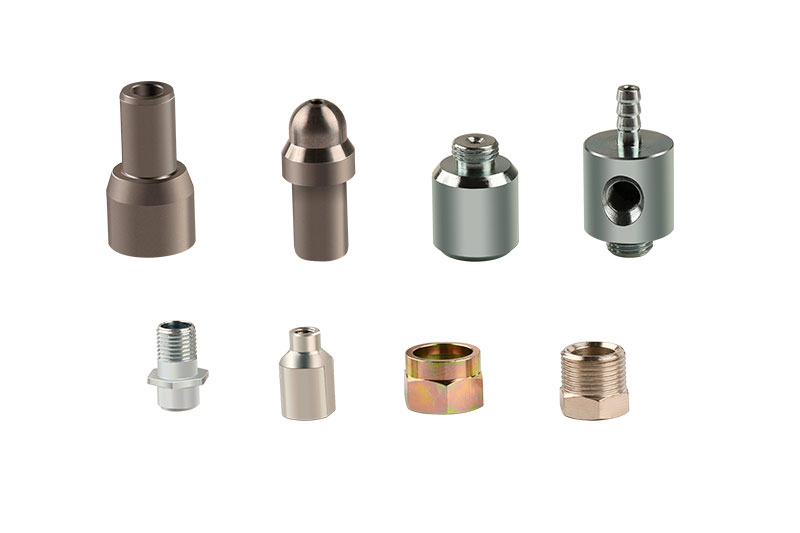
Producing a precision galvanized steel pipe coupling or custom adapter begins with raw material selection. Depending on your annual production volume, mechanical strength requirements, and port geometries, we typically deploy one of two manufacturing routes for carbon steel (such as AISI 1045 or Q235B):
| Manufacturing Parameter | Cold Heading + Secondary CNC Turning | Direct Solid Hexagonal Bar CNC Turning |
|---|---|---|
| Raw Material Utilization | High (85% to 95%); near-net-shape forming minimizes swarf generation. | Moderate (45% to 65%); material lost through core boring and turning. |
| Grain Flow & Strength | Continuous grain flow along the fitting profile enhances fatigue resistance. | Unidirectional straight grain interrupted by machining cuts. |
| Production Volume Suitability | High-volume production runs (typically 10,000+ pieces to amortize tooling). | Medium-to-large runs (standard MOQ starting at 2,000 pieces). |
| Geometric Flexibility | Best for symmetrical hex nipples, straight couplings, and standard reducers. | Ideal for stepped ports, non-standard hex widths, and deep counterbores. |
| Tolerance Control | Pre-formed body finished on CNC lathes to critical tolerances (±0.02 mm). | Complete CNC machining in a single setup achieving ±0.01 mm precision. |
For high-volume contracts, multi-station cold heading forms the primary hexagonal flats and rough internal bores. The blanks are then fed into our automated CNC lathes where single-point threading and face-squaring ensure perpendicular sealing surfaces.
Engineering Review Note: Designing a custom fluid adapter with tight internal tapers or asymmetrical hex sections? Consult our CNC machining team during your early DFM stage to verify whether cold heading blanks or drawn hexagonal bars will deliver the optimal unit cost.
Managing Thread Tolerances Before and After Zinc Electroplating
The primary point of failure in field installations of galvanized pipe connectors is thread binding. Adding a sacrificial zinc layer increases pitch diameter by up to four times the nominal plating thickness on external 60-degree threads. If the machine operator cuts the threads to nominal gauge limits before plating, the finished part will reject the standard ring gauge.
- Pitch Diameter Undersizing/Oversizing: For external NPT or BSPT threads receiving 8 to 12 um of trivalent zinc, external thread pitch diameters are turned slightly undersized. Conversely, internal coupling threads are tapped or single-point cut oversize.
- Plating Method Selection: We utilize barrel electro-galvanizing (trivalent clear, yellow, or black zinc passivation) rather than hot-dip galvanizing for precision fluid components. Electroplating provides an even layer across roots and crests without leaving excess molten zinc tears in thread valleys.
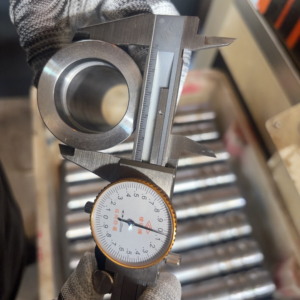
- Post-Plate Thread Gaging: Finished adapters undergo batch inspection using calibrated Go/No-Go thread ring and plug gauges (such as L1/L2 and L1/L3 steps for NPT connections) to verify smooth field engagement.

Sealing Standards across Galvanized Pipe and Fittings
A custom galvanized pipe adapter often serves as an interface between different pipe schedules, hose ends, or manifold ports. Achieving zero-leak performance relies on matching thread geometry to the operating media:
- NPT / NPTF (Dryseal): The 1:16 taper creates mechanical interference along the thread flanks. NPTF standards crush the crests into roots to create a metal-to-metal seal, making precise thread tooth truncation essential during machining.
- BSPT (R / Rc) vs. BSPP (G): BSPT employs a 55-degree flank angle with a tapered seal, while parallel BSPP relies on an elastomeric O-ring, bonded seal washer, or 60-degree machined internal cone.
- UN / UNF with O-Ring Boss (ORB): Used in high-vibration equipment, where straight mechanical threads carry the mechanical load while a captured fluorocarbon or NBR O-ring provides sealing.
You can review detailed profile cross-sections and connection variations in our complete catalog of custom pipe fittings designed for industrial OEM fluid systems.
Corrosion Protection, Packaging, and Storage Integrity
Surface degradation on galvanized components can occur long before parts reach an assembly line. White rust (zinc hydroxide) forms rapidly when freshly plated components contact trapped moisture or acidic packaging materials in unventilated shipping containers.
To eliminate this risk during ocean transit, our shop maintains strict post-machining handling protocols for all carbon steel pipe fittings:
- Passivation Baking & Drying: Trivalent chromium conversion coatings are thoroughly baked and dried to ensure complete film curing.
- Neutral Packaging Materials: We use strictly neutral, sulfur-free, non-acidic cartons to prevent chemical tarnishing of the zinc layer.
- Sealed Protective Inner Bags: Before boxing, every batch of adapters is sealed inside heavy-duty, moisture-barrier clear plastic bags. This separates the metal from airborne humidity and box abrasion during export transit.
FAQ: Sourcing Custom Galvanized Pipe Connectors
What is the difference between electro-galvanized and hot-dip galvanized fittings?
Electro-galvanizing deposits a uniform zinc layer (typically 5 to 15 um) via electrolytic process, leaving threads sharp, clean, and mechanically precise. Hot-dip galvanizing creates a thicker zinc-iron alloy layer (45 to 85 um) that clogs precision threads, requiring secondary chase tapping that exposes unplated steel.
Can you produce a galvanized steel pipe coupling with hybrid threads?
Yes. Because we machine directly on dual-spindle CNC turning centers, we routinely manufacture adapter couplings with NPT on one port and BSPP or Metric on the opposing port, ensuring concentric flow passages across different system standards.
What raw steel grades are used for custom galvanized pipe adapters?
We primarily utilize AISI 1045 medium carbon steel for high tensile strength requirements, or Q235B / 1020 low-carbon steel for components formed via cold heading or where significant ductility is needed.
What is your typical production turnaround for custom machined fittings?
Upon confirmation of 2D/3D engineering prints, first-article samples are machined and surface-treated within approximately 10 business days. Standard production batches (typically 2,000+ units) ship within scheduled factory windows backed by our 99% on-time delivery record.
Send Your Drawings to Xinghe for a Rapid Engineering Assessment
Ready to validate your next production batch of custom adapters or fluid couplings? Submit your STEP, IGES, DWG, or 2D PDF drawings to the technical team at Yuhuan Xinghe Machinery Factory. Our manufacturing engineers will analyze your thread standards, raw blank options, and plating allowances, returning a detailed DFM review and quotation within 24 hours.