When purchasing custom CNC turned parts, overseas buyers often evaluate a machine shop purely by quoting prices and nominal equipment lists. However, seasoned procurement engineers know that reliable part quality is determined on the shop floor long before bar stock is loaded.
Two decisive factors often define project success: material compatibility in the workshop and an audit of machine types, quantities, and spindle precision.
Evaluating your supplier through these shop floor standards ensures your precision parts strictly match your technical drawings.

1. Material Segregation: Why Specialized Shops Outperform Generalists
While some machine shops process carbon steel, stainless steel, brass, and aluminum alloy under one roof, mixing these materials in the same production area introduces manufacturing and financial risks.
Evaluating a supplier material segregation protocol is the first critical step in sourcing.
The Scrap Value and Cross-Contamination Issue (Brass vs. Steels)
Brass is an expensive alloy. During high-volume turning, brass scrap recycling yields significant scrap return value that directly balances overall machining costs.
-
If a workshop processes brass, carbon steel, and stainless steel on adjacent, unsegregated machines, chips will cross-contaminate the scrap bins.
-
Steel chips mixed into brass swarf devalue the recycled scrap drastically, resulting in immediate financial losses.
-
Ferrous metal chips embedded into non-ferrous soft alloys during handling or secondary deburring can cause galvanic corrosion in the finished assembly.
The Coolant and Chemical Compatibility Dilemma (Aluminum vs. Carbon Steel)
Cutting fluids must match the material:
-
Aluminum alloys require specialized coolants with staining inhibitors and controlled pH. Using the wrong fluid leads to surface discoloration and chemical pitting.
-
Carbon and alloy steels require heavy-duty water-soluble fluids or neat cutting oils with extreme-pressure additives designed for high heat dissipation and rapid chip evacuation.
Using a single general-purpose coolant for both aluminum and carbon steel leads to compromised tool life, sticky finishes on aluminum, and rapid rust formation on bare steel workpieces.
Shop Floor Practice:
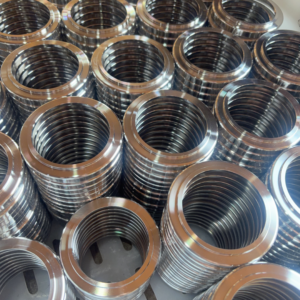
At Yuhuan Xinghe Machinery Factory, our production lines are dedicated exclusively to carbon steel and stainless steel CNC turned parts. By focusing our tooling setups, bar feeding systems, chip conveyors, and high-pressure coolant circulation systems on ferrous alloys, we eliminate cross-material contamination, stabilize cutting parameters, and maintain consistent dimensional accuracy.
Buyers searching for precision shaft collars, threaded adapters, and turned pins can review our dedicated custom cnc turned parts to see how focused production setups prevent contamination.
2. Drawing Review: Auditing Machine Types, Counts, and Spindle Accuracy
A technical drawing with tight tolerances requires matching machine performance. When reviewing project feasibility with a prospective supplier, focus on three specific equipment criteria:
-
Machine Type Match: Determines whether the workshop can handle your part geometry in a single setup (such as live tooling for hex milling, cross-drilling, or threading).
-
Machine Quantity: Determines daily capacity, batch scalability, and whether your delivery schedule will suffer bottlenecks.
-
Spindle Precision: Governs dimensional consistency, runout control, and thread pitch accuracy under continuous operation.
A. Machine Types: Verifying Geometric Capabilities
Not all lathes are identical:
-
2-Axis CNC Lathes: Suitable for standard cylindrical turning, facing, external threading, and drilling.
-
Turn-Mill Centers (Live Tooling): Required if your drawing specifies off-center cross-drilling, hex flats, or keyways. Performing secondary operations in a single clamping eliminates concentricity errors between turned outer diameters and milled features.
-
Automatic Bar-Fed Lathes: Essential for running solid bar stock through automated continuous cycles, lowering unit cycle times on batch production.
Working with an experienced custom cnc machining manufacturer ensures your parts are routed to the proper machine configuration without redundant setups.
B. Machine Quantity: Ensuring Scalable Production Capacity
A shop with only two or three CNC lathes may produce acceptable samples, but delivering ongoing orders of 10,000 to 50,000 units is a different operational challenge.
-
Machine count reveals whether the factory can allocate a dedicated machine group to your project without internal scheduling conflicts.
-
Capacity verification is critical when sourcing high-volume oem cnc turned components that require on-time container shipments.
C. Spindle Precision and Runout Control
Tolerances down to +/-0.01 mm or surface roughness values around Ra 0.8 require rigid machine construction and minimal spindle runout. When reviewing technical drawings:
-
Confirm whether the shop lathe positioning accuracy meets your tightest diameter tolerance.
-
Verify how the shop monitors thread pitch diameters, coaxiality, and surface runout under continuous high-speed turning.

3. Steel Grades Comparison for Turned Components
Because carbon steel and stainless steel exhibit distinct machinability and corrosion resistance characteristics, selecting the correct grade balances unit cost and structural performance:
| Material Family | Common Grades | Key Machining Characteristics | Typical Component Applications |
| Low-Carbon & Free-Cutting Steel | 12L14, 1215, 1018 | Excellent chip breaking; high surface finish; economical. | Hydraulic fittings, hex nipples, bushings, fasteners. |
| Medium-Carbon Steel | 1045 | High tensile strength; good wear resistance; responds well to heat treatment. | Drive shafts, heavy-duty pins, transmission components. |
| Austenitic Stainless Steel | 304, 316 | Outstanding corrosion resistance; work-hardens easily; requires rigid fixturing and stable feed rates. | Fluid fittings, valve bodies, marine hardware. |
| Ferritic / Martensitic Stainless | 416, 430 | Improved machinability (416 is free-machining); magnetic; moderate corrosion resistance. | Pump shafts, motor shafts, precision valve stems. |
For engineers optimizing material specifications for tool life and cost, our technical guide on precision cnc machining outlines cutting parameters and tooling wear management across these alloys.
4. Quality Control and In-Transit Protective Packaging
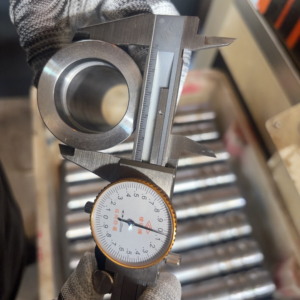
A technical drawing is only satisfied when parts arrive on your assembly line without corrosion or dimensional variance. Beyond in-process dimensional control using thread gauges, optical comparators, and CMM inspection, surface protection is essential for steel components.
-
Thread & Critical Surface Protection: External threads and ground diameters must be shielded during tumbling, washing, and bulk handling.
-
Corrosion Prevention: Carbon steel parts require immediate application of anti-rust oil or secondary surface treatments (zinc plating, black oxide).
-
Sealed Internal Packaging: Steel components should be packed inside sealed transparent inner bags before placement into outer cartons. This isolates parts from moisture and acidic carton materials during ocean transit.
Evaluating these shop-floor practices helps buyers select dependable cnc lathe machining services that safeguard part quality from spindle to delivery.
Partner with a Focused CNC Turning Factory
Evaluating suppliers by material specialization and equipment capabilities prevents quality issues before cutting begins.
If your drawings require batch-produced custom turned components in carbon steel or stainless steel, contact the engineering team at Yuhuan Xinghe Machinery Factory. Send your 2D and 3D drawings (STEP, DWG, PDF) along with volume requirements, and our engineers will evaluate your project, match the equipment, and provide an actionable quote within 24 hours.
Send your 2D and 3D drawings (STEP, DWG, PDF) along with volume requirements, and our engineers will evaluate your project, match the equipment, and provide an actionable quote within 24 hours.