Core Types & Manufacturing Processes of Adapter Fittings
Precision fluid systems rely heavily on high-quality adapter fittings to ensure leak-free connections across hydraulic, pneumatic, and industrial pipeline networks. Choosing the right manufacturing process is critical to achieving mechanical strength, dimensional stability, and long-term corrosion resistance.
Manufacturing Process Comparison
-
- Hot Forging (Red Punching): Ideal for high-pressure structural fittings and complex shapes, offering superior grain flow and mechanical integrity.
- Cold Heading: Efficient for high-volume, small-to-medium fastener and connector production with minimal material waste.
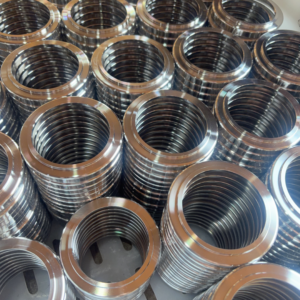
- Secondary CNC Machining: Utilizing advanced CNC lathe turning centers to achieve intricate internal geometries, tight sealing surfaces, and ultra-fine thread profiles.
Common Product Configurations
Our manufacturing lineup encompasses a broad array of standard and custom configurations tailored to global specifications:
-
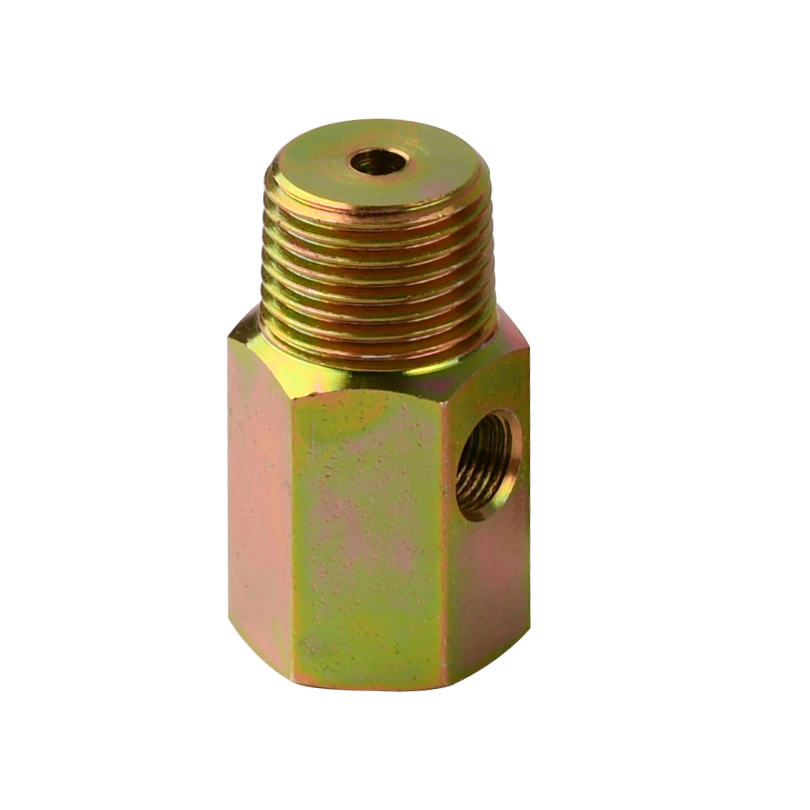
- Straight adapters, 90-degree elbows, and 45-degree elbow fittings
- Tees, crosses, and equal/reducing unions
- Bulkhead fittings, hose barb adapters, hex plugs, and bushings
- Custom turned components manufactured directly from client CAD or STEP drawings
How to Select the Right Adapter Fittings
1. Fluid Media, Pressure & Temperature
-
- Evaluate the operating pressure ratings and burst pressure thresholds of the target application.
- Match the fluid compatibility (such as hydraulic oil, water, chemicals, or compressed air) with the appropriate base metal.
- Consider thermal expansion coefficients and temperature extremes to prevent micro-leakage in dynamic environments.
2. Thread Standards & Precision Control
-
- Supports global thread profiles including NPT, NPTF, BSPP, BSPT, Metric, UNF, and UNEF.
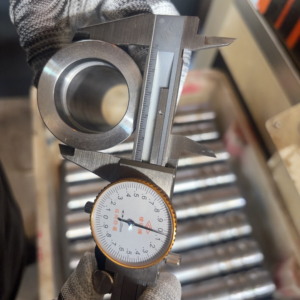
- Stricter quality control maintains machining tolerances down to ±0.02mm and surface roughness up to Ra 0.8 $\mu m$.
- Every production batch undergoes 100% thread Go/No-Go gauge inspection to guarantee seamless assembly. Learn more about our rigorous thread inspection protocols.
3. Material Traceability & MTRs
-
- Carbon Steel: 1020, 1045, 12L14, 1215, Q235B, 42CrMo for high-tensile structural applications.
- Stainless Steel: 201, 303, 304, 304L, 316, 316L for superior chemical resistance.
- Brass & Aluminum: C360, HPb57-3, 6061, 6063 for lightweight and anti-sparking requirements.
- Full Material Test Reports (MTRs) provided upon request for complete supply chain traceability.
4. Surface Treatments & Salt Spray Testing
-
- Enhance corrosion resistance using clear or yellow zinc plating, electroless nickel plating, chemical passivation, black oxidation, or dacromet coatings.
- Surface treatments are validated via neutral salt spray testing to withstand harsh operational environments.
5. Flexible & Professional Export Packaging
-
- Internal protection utilizing vacuum-formed blister trays or sealed individual polybags to prevent thread collision and friction.
- External protection packaged in double-layer corrugated cartons secured on export-grade wooden pallets or heavy-duty wooden crating for safe international transit.
Need technical support for custom thread standards or precision tolerances? Contact our engineering team for free CAD/STEP drawing evaluations.
—
Frequently Asked Questions About Adapter Fittings
Q1: How do you guarantee thread sealing performance and dimensional accuracy?
We maintain strict quality control by utilizing advanced CNC turning equipment combined with 100% thread Go/No-Go gauge inspection and optical profile projectors, ensuring zero thread distortion across every export batch. For more details, check our precision manufacturing standards.
Q2: What are the main advantages of hot forging versus direct CNC bar stock turning?
Hot forging aligns the metal’s grain structure to handle extreme hydraulic pressures and mechanical shock, whereas direct CNC turning offers exceptional dimensional precision and flexibility for low-to-medium volume custom designs without high initial tooling costs.
Q3: How do carbon steel and stainless steel adapter fittings compare in corrosive environments?
While carbon steel fittings offer high mechanical strength and cost-efficiency (typically paired with zinc plating or black oxide finishes), stainless steel grades like 304 and 316 provide inherent, long-lasting resistance against oxidation and chemical corrosion without relying heavily on secondary coatings.
Q4: How do you prevent thread damage and rust during long-distance ocean freight?
We utilize protective packaging methods including individual polybags or vacuum-formed blister trays to isolate components, followed by moisture-barrier wrapping and robust double-wall corrugated cartons secured inside export wooden crates or pallets.
Q5: What is the typical MOQ and lead time for custom OEM/ODM adapter fitting orders?
MOQs vary depending on raw material specifications and tooling requirements, while standard production lead times range from 15 to 30 days. Read our OEM/ODM cooperation guidelines to learn more about our flexible scaling options.
—
Partner with Xinghe (XH) for Precision OEM/ODM Solutions
Backed by over 80 CNC automated production lines, strict ±0.02mm machining tolerances, 100% thread Go/No-Go inspections, and flexible export packaging solutions, Xinghe (XH) is your trusted manufacturing partner for high-performance fluid connection components.
Ready to scale your production with reliable, zero-defect pipe fittings and custom turned components? Send us your CAD/STEP drawings today for a rapid quote within 24 hours!