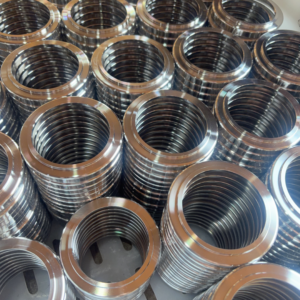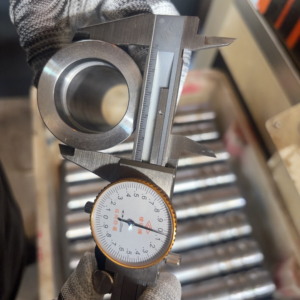
When buyers compare carbon steel pipe fitting manufacturers, most of the conversation goes to price per piece and lead time. The variable that actually decides whether the fitting survives in service is the grade of steel behind the quote, and it is the variable least discussed in the sales cycle. The same elbow geometry can be machined from a low-carbon drawing steel, a medium-carbon shafting steel, or a chromium-molybdenum alloy, and the difference shows up in weldability, plating behaviour, and strength under load. This guide gives you the grade cross-reference table we use on our own floor, explains what each family does in a machined fitting, and shows how to write the grade into an RFQ so quotations from different carbon steel pipe fitting manufacturers are actually comparable.
It is written for sourcing and design engineers who specify custom machined fittings, not for buyers of standard catalog butt-weld elbows.
Key takeaways: carbon content drives the decision, not the grade name. Cross-reference tables are a starting point, never a substitution approval. PMI guns cannot measure carbon, so grade verification lives on the mill test report. Plating choice interacts with steel strength, especially above 1,000 MPa tensile.
In this guide: Grade cross-reference table · Three grade families · Heat treatment · Surface treatment · Specifying the grade in an RFQ · FAQ
Figure 1 — Carbon and alloy steel grade comparison table (GB / ASTM / JIS / EN)
The working version we keep at material review.
The Grade Cross-Reference Table: GB, ASTM, JIS, EN
Buyers arrive with drawings from different standards systems: a Chinese OEM drawing calls out 45#, a US brand drawing calls out 1045, a European program calls out C45. When a carbon steel pipe fitting manufacturer quotes across these systems, the table below is the common ground. One caution before you use it: these are nearest equivalents for general engineering comparison. Yield, impact, and sulphur limits are not identical across systems, and an equivalent on paper is not an approval for substitution. The mill test certificate for the actual heat is the governing document.
| GB | ASTM / AISI | JIS | EN / DIN | Typical use in fittings |
| 08F | 1008 / G10080 | SWCH6A (cold-heading wire) | C10D / DC01 family (1.0330) | Cold-formed and low-load parts, barbs |
| 10# | 1010 / G10100 | S10C / SWCH10K | C10 (1.0301); C10E = 1.1121 | Low-carbon fittings, barb and push-in bodies |
| Q235 | A36 / 1015 | SS400 / SM400A | S235JR (1.0038) | Structural brackets, non-pressure fittings, galvanised work |
| 20# | 1020 / 1022 | S20C (SCW480 is the cast variant) | C22 (1.0402); C22E = 1.1151 | General machined fittings, welded assemblies |
| 35# | 1035 | S35C | C35 (1.0501); C35E = 1.1181 | Medium-strength bodies, threaded adapters |
| 45# | 1045 | S45C | C45 (1.0503); C45E = 1.1191 | High-strength bodies, plugs, nuts, hardened parts |
| Q355 | A572 Gr. 50 | SM490 / SMA490BW | S355JR (1.0045); S355J2 = 1.0577 | Load-bearing and low-temperature structural parts |
| 40Cr | 5140 | SCr440 | 41Cr4 (1.7035) | Quenched-and-tempered high-strength fittings |
| 42CrMo | 4140 | SCM440 | 42CrMo4 (1.7225) | High-pressure, fatigue-loaded, heat-treated parts |
Two notes on rows people get wrong:
-
The E-suffix EN grades (C45E, C35E, C22E) are the controlled-sulphur versions of the plain grades: C45E is 1.1191 with sulphur limited to 0.035%, while plain C45 is 1.0503 with sulphur up to 0.045%. Mixing the number and the name is a common error in circulated cross-reference tables, and it matters because the E grade buys you better toughness and isotropy.
-
S355JR is 1.0045; the number 1.0570 belongs to the older S355J2G3, now S355J2 (1.0577). If your drawing says one and the certificate says the other, stop and reconcile before production.
 Three Grade Families, Three Different Behaviours
Rather than memorising nine rows, group them by carbon content and alloying. Carbon steel pipe fitting manufacturers work in three families, and the behaviour of a machined fitting follows from that grouping.
| Family | Carbon | Typical tensile | Weldability | Plating behaviour |
| Low-carbon (08F, 10#, Q235, 20#) | < 0.22% | ~400–470 MPa | No preheat needed | Zinc and hot-dip galvanising without restrictions |
| Medium-carbon (35#, 45#) | 0.32–0.50% | ~600–850 MPa Q&T | Preheat ~250°C, post-weld relief | Bake after electroplating to manage hydrogen |
| Alloy (40Cr, 42CrMo) | 0.37–0.45% + Cr/Mo | ~900–1,200 MPa Q&T | Preheat plus controlled cooling | Bake mandatory above ~1,000 MPa |
Low-carbon: 08F, 10#, Q235, 20#
Carbon under roughly 0.22%. These grades machine fast, weld without preheat, and take zinc plating cleanly. The trade-off is strength: S20C-class material sits around 400–470 MPa tensile in the as-rolled condition, so wall thickness has to carry the pressure rating instead of the alloy. Most barbed, push-in, and plumbing-style fittings we machine come from this family, and Q235/S235JR dominates galvanised structural work.
Medium-carbon: 35#, 45#
Carbon from roughly 0.32% to 0.50%. This is the strength tier: 1045/C45 reaches about 700–850 MPa tensile when quenched and tempered in thin sections, and it takes induction hardening to around 55–58 HRC at the surface. The costs are weldability and plating: above roughly 0.4% carbon, welding needs preheat around 250°C and post-weld stress relief, and high-strength plated parts carry hydrogen-embrittlement risk that must be baked out. Plugs, hex nuts, and high-load threaded bodies come from this family.
Alloy: 40Cr, 42CrMo
Chromium and chromium-molybdenum grades. The alloy content buys hardenability, meaning the strength holds through larger sections and the part resists fatigue. 42CrMo4 (4140) is the default answer when a fitting sees cyclic pressure, shock, or a hardened thread. It is also the tier where you must ask for heat treatment records explicitly, because the grade name alone guarantees nothing about the delivered property block.
What Heat Treatment Changes on a Fitting
A grade callout without a delivery condition is half a specification. Serious carbon steel pipe fitting manufacturers treat the heat treatment line as part of the quote, not an afterthought: the same 42CrMo bar can arrive normalized at roughly 850–950 MPa tensile or quenched and tempered well above that, and the fitting behaves differently in both cases.
-
Normalising refines the grain after hot forming and gives a uniform, predictable baseline. Default for 20# and 35# bodies before machining.
-
Quench and temper is where 45# and the alloy grades earn their strength. Tempering between roughly 550–660°C trades hardness back for toughness; skip it and a plated part is a crack waiting for hydrogen.
-
Stress relief after heavy machining keeps threaded bodies straight and dimensionally stable.
On our floor, quenched-and-tempered work is done with hardness records per batch, and the tempering temperature is reported on the certificate. If a carbon steel pipe fitting manufacturer quotes your 4140 fitting without mentioning delivery condition or tempering, the quote is incomplete no matter how attractive the number looks. See our heat-treated quenched and tempered carbon steel pipe fittings for how we present this on a product page.
Surface Treatment: Where Grade and Finish Interact
Zinc plating, electroless nickel, black oxide, phosphating, and chrome plating all behave differently depending on the steel underneath, and the interaction runs both ways.
-
Low-carbon grades plate easily and take galvanising for outdoor service. Q235/S235JR with hot-dip zinc is the standard corrosion answer for non-precision work.
-
High-strength parts need embrittlement control. Electroplated 40Cr or 42CrMo above roughly 1,000 MPa tensile must be baked after plating, typically within hours of the tank. Ask any candidate supplier how they handle the bake, and judge the answer by whether a number and a timeframe come back.
-
Machined threads change the plating decision. Plating builds up on external threads and thins in internal ones, so a plated NPT thread gauges differently than a bare one. Decide whether the thread is cut before or after plating, and write it on the drawing.
The plating side of this decision has its own walkthrough in our guide to plating choices for carbon steel pipe fittings.
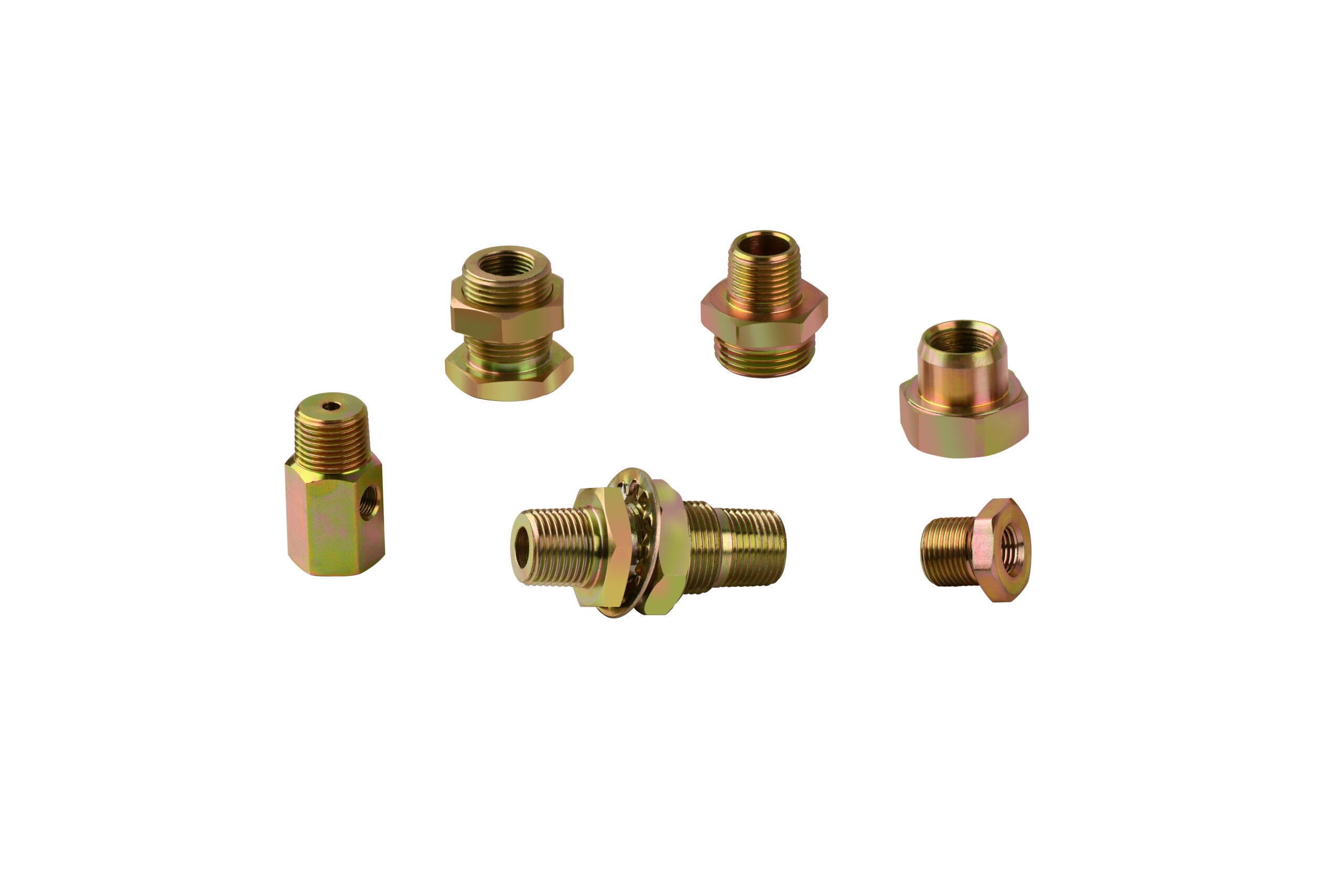
Figure 2 — Same fitting geometry, two grades, two finishes
The specification, not the catalogue photo, decides which one arrives.
How to Write the Grade Into the RFQ
Grade ambiguity is the cheapest error to prevent and one of the most expensive to discover at goods-in. Experienced carbon steel pipe fitting manufacturers will ask these four questions before quoting; if nobody asks, volunteer the answers anyway.
-
Name the standard, not just the number. “45# per GB/T 699” and “AISI 1045” are close but not identical documents. Write the standard designation and, if you accept equivalents, say which ones.
-
State the delivery condition. As-rolled, normalised, or quenched and tempered, with hardness or tensile limits if they matter to you.
-
Require the mill test report. EN 10204 3.1 MTR with heat number, chemistry, and mechanicals. This is where grade verification actually lives.
-
Use PMI for the alloying elements only. Handheld XRF verifies chromium, molybdenum, and the tramp elements. It cannot measure carbon, so a PMI reading can never prove a part is 1045 rather than 1020. Chemistry comes from the certificate or from combustion analysis on a sampled coupon.
Once the grade line is right, the rest of the RFQ fields follow the same logic as any custom part: our pipe fitting drawing and quote checklist lists them all, and our overview of carbon steel pipe fitting manufacturing and supply covers the factory-level picture that sits above this grade discussion. If your application borders on corrosive media, read the carbon-versus-stainless trade-off in carbon steel vs stainless for custom fittings before locking the material.
Unsure which grade your drawing implies? Send the drawing and the service conditions: pressure, temperature, media, and whether the part gets welded or plated. Our engineers will confirm the grade, the delivery condition, and the finish together, and quote within 24 hours.
FAQ: Carbon Steel Grades for Pipe Fittings
What grade is equivalent to Q235 in ASTM?
A36 is the commonly used comparison, with JIS SS400 and EN S235JR (1.0038) on the same line. These are nearest equivalents for general comparison, not certified substitutes, so confirm yield and impact requirements against the actual project specification.
Is C45E the same as 1045 steel?
Effectively yes in chemistry: C45E (1.1191) is the controlled-sulphur European version of AISI 1045, matched by JIS S45C and GB 45#. Mechanical limits differ slightly between standards, so the mill test report decides acceptance.
Can PMI verify a carbon steel grade?
Only partially. XRF-based PMI reads alloying and tramp elements but cannot detect carbon. It can prove a part is not 42CrMo, but not that it is 1045. Grade confirmation requires the MTR or combustion carbon analysis.
Which carbon steel grade should I use for zinc-plated fittings?
Low-carbon grades such as 20#, 1020, or Q235 plate cleanly and need no embrittlement bake. If the part is 45# or 42CrMo and quenched and tempered, specify hydrogen-relief baking immediately after electroplating.
Do equivalent grades have identical mechanical properties?
No. Cross-reference rows share nominal carbon content and general application, but yield, tensile, impact, and sulphur limits are set by each standard. Treat equivalents as shortlisting tools and accept material on the certificate.
Send Your Drawing for a Grade-Checked Quote
Yuhuan xinghe machinery Factory machines carbon steel pipe fittings from bar stock on more than 60 CNC automatic lathes on gantry-robot loading lines with live tooling, working in 10# through 45#, Q235B, 40Cr, and 42CrMo, with zinc plating, electroless nickel, black oxide, phosphating, and chrome plating under one roof. Every batch ships with material traceability, Go/No-Go thread gauging, and hardness or tensile records where the delivery condition calls for them.
Send your STEP, IGES, CAD, or 2D PDF drawing with grade, delivery condition, thread standard, finish, and quantity. Our engineers will check manufacturability, confirm the grade line, and reply with a quote within 24 hours.