When evaluating low-carbon structural materials for fluid lines, welded bosses, mounting flanges, and CNC machined adapters, design engineers and global procurement teams frequently compare two of the most ubiquitous Chinese carbon steel grades: 20# steel and Q235 steel (predominantly specified as Q235B).
While both belong to the low-carbon category and share good ductility and weldability, they are engineered under different metallurgical philosophies.
As an OEM/ODM precision pipe fitting supplier in China, Yuhuan Hongqian Machinery Co., Ltd. delivers an in-depth breakdown of the differences between 20# and Q235B steel, their international equivalent grades, chemical purity, mechanical metrics, and suitability for custom pipe fitting manufacturing.
What is Q235 Material & Q235 Steel Grade?
Q235 (governed by the Chinese national standard GB/T 700) is a standard plain carbon structural steel. The designation defines the mechanical yield threshold of the material:
-
Q: Yield Point.
-
235: Designates the minimum guaranteed yield strength of 235 MPa for material thicknesses ≤ 16 mm.
-
B: Denotes quality grade B. Q235B mandates a room-temperature (+20°C) Charpy V-notch impact toughness test, offering tighter phosphorus and sulfur limits than grade Q235A.
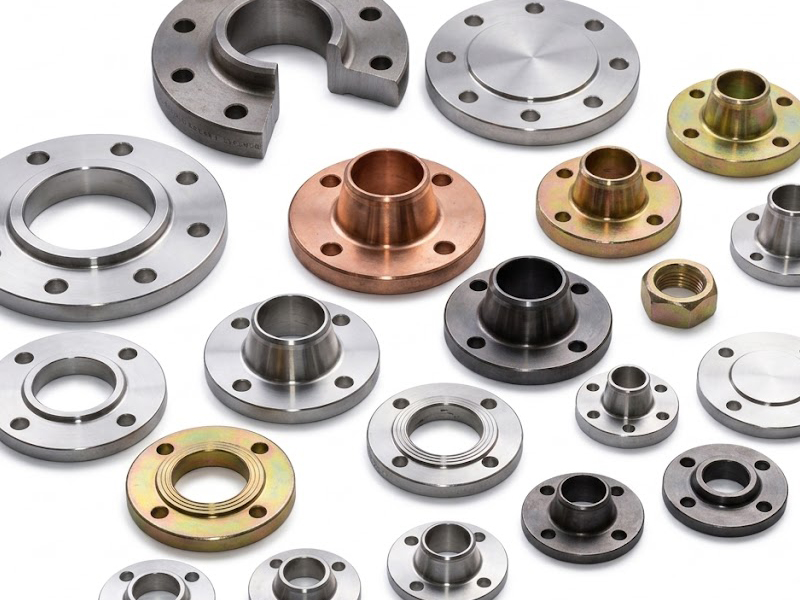
In global fabrication, Q235 steel is widely specified for building frames, structural brackets, welded pipe flanges, conduit fittings, and industrial baseplates where cost efficiency, cold bending, and high-yield weldability take priority over high-pressure containment.
What is 20# Steel Grade?
20# steel (standardized under GB/T 699) is classified as a high-quality carbon structural steel:
-
20: Designates the nominal carbon content of 0.20%, held within a strictly controlled window of 0.17% to 0.24%.
Unlike Q235, which is produced to satisfy bulk yield and tensile strength requirements, 20# steel is inspected based on precise chemical composition and low non-metallic inclusion levels. It is the material of choice for seamless fluid pipes, cold-drawn hexagonal/round bar stock, high-pressure CNC threaded adapters, hydraulic hose fittings, and parts requiring surface case hardening (carburizing).
Global Equivalent Standards for Q235B & 20# Steel
International Equivalent Grades Comparison Chart
| Country / Standard System | Standard Code | Q235 / Q235B Equivalent | 20# Steel Equivalent | Core Technical Difference |
| China (GB) | GB/T 700 / GB/T 699 | Q235B | 20# (20 Steel) | Yield threshold guarantee vs. Strict chemical composition |
| United States (USA) | ASTM / AISI / SAE | ASTM A36 (UNS K02600) | AISI/SAE 1020 (UNS G10200) / ASTM A105 | A36 is structural; 1020/A105 defines narrow carbon range |
| Europe (EN / DIN) | EN 10025 / EN 10083 | S235JR / 1.0038 (St37-2) | C22E / C22 / 1.0402 | S235 is standard structural; C22 is engineering carbon steel |
| Japan (JIS) | JIS G3101 / JIS G4051 | SS400 | S20C | SS400 verifies tensile strength; S20C controls chemistry |
Engineering Verification Note: ASTM A36 is equivalent to Q235 steel, whereas AISI 1020 and ASTM A105 represent 20# steel. When sourcing machined components, verify the Mill Test Certificate (EN 10204 3.1 MTC) to ensure the raw material matches your system pressure and heat treatment criteria.
Chemical Composition & Metallurgical Purity Comparison
The fundamental difference between 20# steel and Q235 lies in the deoxidation level and the threshold for harmful impurities (Phosphorus and Sulfur).
Chemical Element Content (GB/T 699 vs. GB/T 700)
| Chemical Element | 20# High-Quality Steel | Q235B Structural Steel | Impact on CNC Machining & Fluid Integrity |
| Carbon (C) | 0.17% – 0.24% | 0.12% – 0.20% (up to 0.22%) | 20# provides narrower matrix hardness variation |
| Manganese (Mn) | 0.35% – 0.65% | 0.30% – 0.70% (max 0.80%) | Solid-solution strengthening and molten deoxidation |
| Silicon (Si) | 0.17% – 0.37% | ≤ 0.35% | Acts as a deoxidizer, ensuring low porosity |
| Phosphorus (P) | ≤ 0.035% (Strict control) | ≤ 0.045% (Wider allowance) | Lower P in 20# prevents low-temperature cold cracking |
| Sulfur (S) | ≤ 0.035% (Strict control) | ≤ 0.045% (Wider allowance) | Lower S prevents hot tears and non-metallic inclusions |
| Deoxidation Method | Fully Killed | Semi-Killed / Killed | 20# billets provide higher density and fewer internal voids |
Mechanical Properties & Key Performance Differences
Mechanical Properties Overview
| Property Metric | 20# Steel (GB/T 699) | Q235B Steel (GB/T 700) | ASTM A36 / AISI 1020 Reference |
| Tensile Strength Rm (MPa) | ≥ 410 | 370 – 500 | 400 – 550 |
| Yield Strength Re (MPa) | ≥ 245 | ≥ 235 | ≥ 250 |
| Elongation A5 (%) | ≥ 25 | ≥ 26 | ≥ 20 |
| Delivery Hardness (HB) | ≤ 156 (Annealed/Normalized) | ≤ 140 – 150 | ≤ 143 |
1. Batch Machining Consistency
Q235 steel can be shipped as long as its mechanical yield strength reaches 235 MPa, allowing broad batch-to-batch chemical variations. In automated multi-axis CNC lathe operations, these variations can lead to inconsistent tool wear. In contrast, 20# steel delivers predictable chip breaking and uniform dimensional repeatability.
2. Carburizing and Case Hardening
Because of its controlled chemistry, 20# steel can undergo carburizing and quenching to create an abrasion-resistant outer layer (56–62 HRC) while preserving a ductile core for impact resistance. Q235 is unsuited for precision case hardening because composition fluctuations result in uneven case depth and soft spots.
Pipe Fitting Manufacturing: Can 20# and Q235B Substitute for Each Other?
Material Substitution Decision:
├── 20# replaces Q235B ────────> ACCEPTABLE (Upward replacement; enhances structural density)
└── Q235B replaces 20# ────────> RESTRICTED (Prohibited in high-pressure, CNC-threaded, or carburized parts)
Substitution Guidelines
-
Where 20# CAN Replace Q235B: In structural frames, low-pressure manifold housings, mounting brackets, and low-pressure plumbing, 20# steel can serve as an upward upgrade to Q235, providing cleaner internal structure and superior weld soundness.
-
Where Q235B CANNOT Replace 20#:
-
High-pressure seamless hydraulic fittings and adapters subjected to pulsating fluid lines.
-
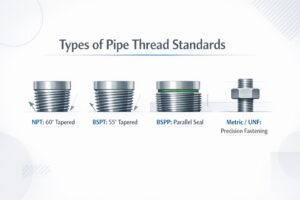
Precision CNC machined components with tight BSPP, BSPT, NPT, or Metric thread tolerances where material inclusions could cause micro-leak paths.
-
Components that require surface carburizing for wear resistance.
-
Machining and Surface Protection Notes
-
CNC Threading: Low-carbon steels exhibit high ductility, which can generate built-up edge (BUE) and burrs during threading. Precision turning requires polished rake angles, optimized chip breakers, and wear-resistant coatings (like AlTiCrN) to maintain thread surface roughness between Ra 1.6 μm and Ra 3.2 μm.
-
Corrosion Resistance: Fittings made from either grade receive Trivalent Zinc Plating (Cr3+ Clear / Yellow) to withstand 72h to 96h Neutral Salt Spray (NSS) testing, or Black Oxide with Anti-Rust Oil for enclosed fluid systems.
Frequently Asked Questions (FAQ)
Can ASTM A36 directly replace 20# steel in hydraulic pressure fittings?
No. ASTM A36 is the structural equivalent of Q235 steel. For pressurized fluid adapters and hydraulic ports, AISI 1020 or forged ASTM A105 should be selected to match the pressure rating and chemical purity of Chinese 20# steel.
Why is 20# cold-drawn bar stock preferred over Q235 for precision CNC turned parts?
20# cold-drawn bar stock features lower non-metallic inclusion rates and strict dimensional consistency. This guarantees burr-free thread crests on BSPP (ISO 228-1), BSPT (ISO 7-1), and NPT (ANSI/ASME B1.20.1) threads for reliable sealing interfaces.
Do Q235B and 20# steel require preheating prior to welding?
No. Because their carbon equivalent remains low (C ≤ 0.24%), both Q235 and 20# steel offer weldability across MIG, TIG, and manual arc welding without preheating or post-weld heat treatment for standard wall thicknesses.
Source Custom Carbon Steel Pipe Fittings from Yuhuan Hongqian Machinery
As an ISO-certified OEM/ODM pipe fitting supplier in China, Yuhuan Hongqian Machinery Co., Ltd. produces precision-turned and hot-forged fittings in 20#, Q235 steel, AISI 1020, ASTM A36, and AISI 1045.
-
Raw Material Traceability: Every production lot includes full EN 10204 3.1 Mill Test Certificates (MTC).
-
CNC Machining Capability: Automated CNC turning and robotic gantry production lines hold tight machining tolerances within ±0.01 mm.
-
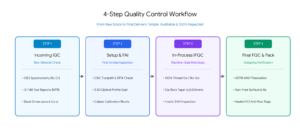
Strict Quality Control: In-process thread ring/plug gauge validation and optical projection inspections before packaging.
Need certified low-carbon or medium-carbon steel pipe fittings?
Contact our engineering team today to submit your technical drawings, RFQs, or sample inquiries for an immediate manufacturing assessment and competitive quote.