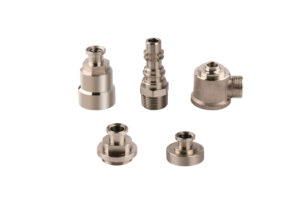
Galvanized steel pipe fittings are critical fluid-handling components engineered to branch, direct, adapt, and terminate industrial piping networks. When systems demand mechanical fatigue resistance beyond structural plastics and superior structural integrity compared to brittle cast iron, precision-machined galvanized fittings provide a reliable, leak-free solution.
While off-the-shelf standard malleable castings flood the replacement market, demanding hydraulic lines, manifold assemblies, and industrial utility skids require strict dimensional tolerances, certified carbon steel metallurgy, and burr-free threads.
As an experienced China OEM/ODM CNC turning supplier, this engineering guide analyzes primary fitting geometries, carbon steel grades (20#, 35#, 45#, and Q235B), blank forming methods (including cold heading blanks), advanced surface plating processes, galvanic corrosion rules, and accurate sizing practices.
1. Quick Technical Breakdown: Common Types of Galvanized Fittings Pipe
Unlike standard cast malleable iron fittings that frequently suffer from porosity or off-center threads, CNC turned carbon steel fittings machined from solid round bar, cold heading blanks, or forged hollows ensure high pressure retention and consistent thread engagement.
| Fitting Type | Primary Mechanical Function | Connection / End Form | Pressure Class / Schedule | Typical Applications |
Elbow Fitting (45° / 90° / Street)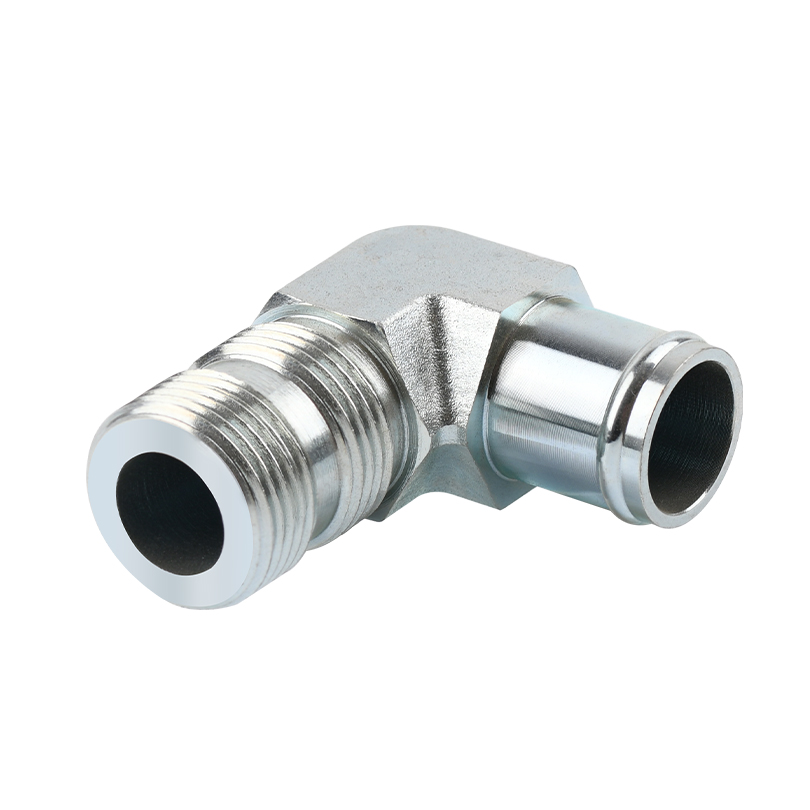 |
Reroutes pipeline direction at 45° or 90° | Female x Female, Street Male x Female | Class 150 to Class 3000 | Directional manifolds, hydraulic loops |
T-Connector (Equal / Reducing Tee)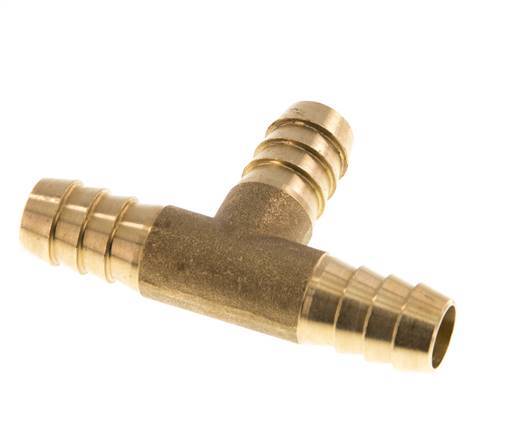 |
Splits or combines fluid flow at 90° | Female NPT / BSPT / Metric | 150 PSI to 3000 PSI | Fluid distribution headers, sensor blocks |
| Cross Fitting
|
4-way fluid distribution across orthogonal axes | 4-way female threaded connection | Class 150 to Class 3000 | Fire sprinkler grids, multi-port manifolds |
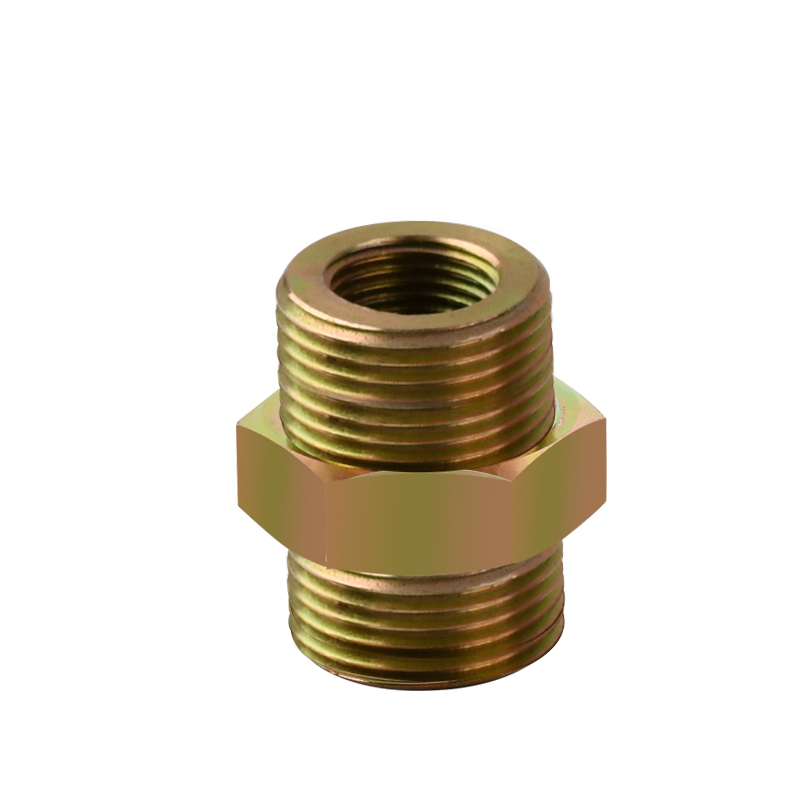
| Hex Bushings & Hex Nuts | Diameter step-downs and panel lock retention | Male x Female thread, Hex OD | Up to Schedule 160 | Bulkhead mounting, port reduction |
| Coupling / Socket
|
Straight-line joining of two male pipe ends | Full / half female internal threads | Up to 3000 PSI | High-pressure line runs, tank welding bungs |
| Barrel Nipple
|
Unthreaded center body with male ends | Male NPT / BSPT with smooth middle | Schedule 40 / Schedule 80 / 160 | Spacing valves, pump manifold connections |
| Threaded Nipple (Close / Hex Nipple)
|
Continuous or hex-collared short male fitting | Fully threaded or central hex wrench flat | Schedule 80 / Class 3000 | Meter hookups, compact valve couplings |
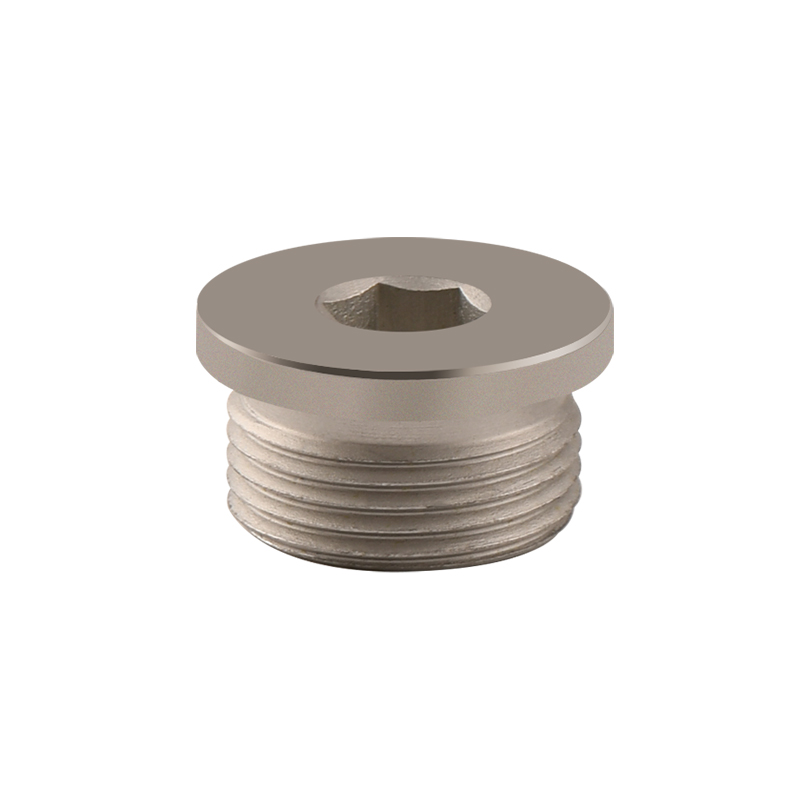
| Cap & Hex Plug
|
Positive mechanical termination of line ends | Female internal thread (Cap) / Male hex (Plug) | Class 150 to Class 3000 | Hydrostatic testing ports, permanent dead-ends |
| Union Fitting
|
3-piece assembly for quick disconnection | Spherical ground-joint seat | 150 PSI to Class 3000 | Pump maintenance loops, meter servicing |
2. Advanced Metallurgy & Blank Forming: 20#, 35#, 45#, and Q235B
Standard cast galvanised iron pipe fittings use malleable cast iron (such as KTH350-10), which can crack under cyclic pressure spikes, thermal shocks, or excessive tightening torque. Custom OEM/ODM manufacturing utilizes wrought carbon steel processed via multi-axis CNC lathe centers:
-
20# Steel (AISI 1020 / 0.17% to 0.23% C): Excellent weldability and high cold-forming ductility. An optimal choice for weldable half couplings, pipe bungs, cold heading preforms, and low-to-medium pressure plumbing manifolds.
-
35# Steel (AISI 1035 / 0.32% to 0.39% C): Balanced yield strength and impact toughness. Widely used for hydraulic elbow fitting bodies, fluid adaptors, and high-vibration engine connection ports.
-
45# Steel (AISI 1045 / 0.42% to 0.50% C): High tensile strength and elevated hardness. Ideal for heavy-duty hex nuts, high-pressure threaded nipple designs, and structural adaptors exposed to severe mechanical loads.
-
Q235B Structural Carbon Steel: Economical, general-purpose carbon steel with reliable elongation and consistent weld properties. Best suited for high-volume custom brackets, agricultural fittings, and standard drainage connectors.
Blank Forming: Cold Heading vs. Forging vs. Bar Turning
-
Cold Heading Blanks: Cold heading allows high-speed deformation of wire rod into near-net shape blanks without cutting internal material fibers. This delivers continuous grain flow, superior shear resistance for components like hex nuts and threaded nipple blanks, and material efficiency on high-volume production runs.
-
Solid Bar Turning: Delivers maximum dimensional freedom for small-to-mid volume custom orders and complex internal geometry.
-
Forged Blanks: Guarantees dense internal grain structures for heavy-wall, Class 3000 high-pressure tees and cross fittings.
3. Surface Protection & Plating: Passivation, Chromate, and Coatings
Corrosion resistance depends directly on the passivation chemistry and coating thickness applied over the carbon steel core.
[Base Carbon Steel Blank (20# / 35# / 45# / Q235B)]
                       │
         ┌─────────────┴─────────────┐
         ▼                           ▼
Zinc Plating & Passivation     Advanced Functional Coatings
• Yellow Zinc Plating         • Chemical Black Oxide (Blackening)
• Trivalent Yellow (Cr3+)     • Industrial Hard / Decorative Chrome
• Trivalent Black Zinc        • Precision Gold Plating
• Hot-Dip Galvanizing (HDG)   • Cathodic Electrophoretic Coating (E-Coating)
-
Yellow Zinc Plating & Trivalent Yellow Passivation (Cr3+): Provides long-lasting anti-corrosion performance. Our eco-friendly trivalent yellow chromate passivation achieves superior neutral salt spray performance (120 to 240+ hours without white rust) while complying with RoHS and REACH regulations.
-
Trivalent Black Zinc Plating: Delivers an aesthetic black appearance combined with sacrificial zinc protection, widely used in automotive chassis plumbing and concealed equipment.
-
Chemical Black Oxide (Blackening): A conversion coating that changes surface iron into magnetite (Fe3O4). Provides minimal dimensional change (less than 1 μm build-up), making it ideal for precision threads and internal valve parts requiring light corrosion resistance and oil-retaining properties.
-
Chrome Plating & Electrophoretic Coating (E-Coating): Hard chrome provides high wear resistance on sealing seats. Cathodic E-coating delivers uniform edge coverage and chemical barrier protection across complex internal passages.
-
Precision Gold Plating: Applied for specialized instrumentation fittings, electrical grounding joints, and high-purity laboratory adapters requiring minimal contact resistance and zero oxidation.
-
Hot-Dip Galvanizing (HDG): Creates thick zinc-iron alloy layers (minimum coating thickness ≥ 86 μm, weight ≥ 610 g/m²) for outdoor agricultural, marine, and buried plumbing installations.
CNC Machining Note on Thread Tolerances: Heavy zinc coatings can interfere with fine thread engagement. We machine threads with calibrated pitch diameter allowances (oversize tapping according to ASTM A153/EN ISO standards) using PVD-coated carbide tooling to ensure free-running thread fits after plating.
4. Galvanic Corrosion: Mixing Galvanized Fittings with Other Metals
Galvanic corrosion takes place when dissimilar metals make physical contact in the presence of an electrolyte (such as water, saline spray, or condensation). The more active metal serves as an anode and undergoes accelerated material loss.
Can I Attach a Brass Fitting to a Galvanized Steel Pipe?
Yes, brass fittings can be joined directly to galvanized steel pipes. Brass (a copper-zinc alloy) and galvanized steel share close electrochemical potentials in standard galvanic series charts. In residential plumbing and hydronic heating, brass is commonly utilized as an isolating adapter between raw copper tubing and galvanized steel lines, preventing rapid galvanic attack under normal municipal fluid conditions.
Do Stainless Steel Fittings Corrode Galvanized Pipe?
Yes, coupling stainless steel fittings directly to galvanized steel pipe causes rapid galvanic destruction of the galvanized pipe. Stainless steel (such as 304 or 316) is a noble, cathodic material. When screwed directly onto a galvanized pipe in moist environments:
-
The zinc layer on the galvanized steel becomes an active sacrificial anode.
-
The zinc dissolves rapidly, exposing the underlying carbon steel to localized pitting and premature thread root failure.
-
Engineering Solution: Always separate stainless steel fittings from galvanized pipes using an approved dielectric union, non-conductive PTFE isolation bushings, or insulating gaskets.
5. Engineering Sizing Guide: Measuring Galvanized Pipe Fittings
A frequent field mistake is measuring thread outside diameter with a straight ruler and assuming it equals nominal pipe size. Industrial Nominal Pipe Sizes (NPS) designate flow capacity rather than physical decimal diameters.
How to Identify Nominal Pipe Size (NPS):

[Measure Thread OD via Caliper] ──► [Reference NPS Conversion Table] ──► [Verify Thread Pitch via Pitch Gauge]
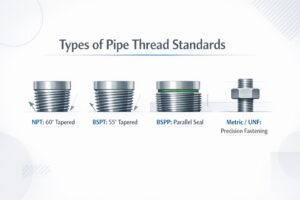
    • ~21.3 mm (0.840")                  • 1/2" NPS / DN15                   • NPT (60° American Taper)
    • ~26.7 mm (1.050")                  • 3/4" NPS / DN20                   • BSPT (55° British Taper)
    • ~33.4 mm (1.315")                  • 1" NPS / DN25                     • NPSM / BSPP (Parallel)
-
Measure Outside Diameter (OD) with a Digital Caliper: For male components like a barrel nipple or threaded nipple, measure across the crest of the thread. For female items like a t-connector, elbow fitting, or cap, measure the interior minor diameter.
-
Convert Dimension to Nominal Pipe Size (NPS / DN):
-
Measured male thread OD of ~21.3 mm (0.840 in) = 1/2″ NPS (DN15)
-
Measured male thread OD of ~26.7 mm (1.050 in) = 3/4″ NPS (DN20)
-
Measured male thread OD of ~33.4 mm (1.315 in) = 1″ NPS (DN25)
-
Measured male thread OD of ~42.2 mm (1.660 in) = 1-1/4″ NPS (DN32)
-
Measured male thread OD of ~48.3 mm (1.900 in) = 1-1/2″ NPS (DN40)
-
-
Confirm Thread Profile & Sealing Design:
-
NPT (ANSI/ASME B1.20.1): 60° thread angle, 1:16 taper. Requires thread sealant tape or paste.
-
BSPT (ISO 7-1, EN 10226): 55° thread angle, 1:16 taper.
-
NPSM / BSPP: Parallel mechanical straight threads that rely on an elastomeric O-ring, bonded washer, or flat gasket for fluid-tight sealing.
-
6. Sourcing & Technical FAQ
Q1: Can I attach brass fitting to galvanized steel pipe without a dielectric insulator?
Yes. Brass and galvanized steel have minimal galvanic potential difference under normal working conditions. Brass fittings function effectively as neutral transition pieces in commercial and industrial plumbing lines.
Q2: Does stainless steel fittings corrode galvanized pipe in closed-loop systems?
Yes. If moisture or conductive fluids are present, stainless steel accelerates the galvanic decay of the galvanized pipe’s zinc and carbon steel core. An isolating dielectric union or insulating sleeve is required to maintain system integrity.
Q3: How to measure galvanized steel pipe fittings for replacement?
Use a digital vernier caliper to determine the thread outside diameter, then cross-reference an engineering NPS conversion chart. For example, a male thread reading 26.7 mm (1.05 in) corresponds to a 3/4″ nominal size, not a 1″ fitting. Verify whether the threads are tapered (NPT/BSPT) or parallel (BSPP/NPSM) with a pitch gauge.
Q4: What is the practical difference between a barrel nipple and a threaded nipple?
A barrel nipple features a short unthreaded pipe section in the center with tapered male threads at both ends, allowing wrench grip without damaging threads. A close threaded nipple is threaded across its entire length, creating an ultra-compact joint between two adjacent female fittings.
Q5: Why are cold heading blanks preferred for high-volume custom fittings?
Cold heading rearranges the internal grain structure along component contours, increasing fatigue limits and shear strength while eliminating material waste. It provides consistent part-to-part dimensional uniformity before final precision CNC threading.
7. Partner with an OEM/ODM CNC Machining Supplier in China
Looking to replace porous iron castings with high-precision, defect-free carbon steel components? We provide comprehensive OEM and ODM contract manufacturing services for standard and custom pipe fittings, manifold adapters, and hydraulic components.
-
Raw Materials & Blanks: Certified 20#, 35#, 45#, and Q235B solid carbon steel round bar, precision cold heading blanks, hot forged blanks, and seamless heavy-wall tubing.
-
Machining Precision: Multi-axis CNC lathe turning and live-tool milling centers maintaining concentricity within 0.02 mm and strict thread pitch tolerances.
-
Surface Protection & Finishing: High-spec zinc plating with a primary focus on yellow zinc plating and eco-friendly trivalent yellow passivation (Cr3+ yellow chromate), along with trivalent black zinc, chemical black oxide (blackening), industrial chrome plating, precision gold plating, and cathodic electrophoretic coating (E-coating).
-
Quality Verification: 100% thread plug and ring gauge inspection, 2.5D optical projector verification, neutral salt spray testing (exceeding 72 to 240+ hours without corrosion), and custom laser batch marking.
Start Your Custom Fitting Project Today
Submit your technical 2D blueprints (PDF/DWG) and 3D CAD models (STEP/IGS) with your production volume targets. Our engineering team provides a detailed quotation, DFM (Design for Manufacturability) analysis, and sample schedule within 24 business hours.
[Contact Our Engineering Sales Team] | [Submit Drawings for an Instant OEM/ODM Quote]