A stainless steel pipe fitting can look right and still wreck a bulk order. Wrong grade, Schedule, connection, or paperwork? That’s where costs snowball fast.
For EPC teams and buyers, 304 versus 316L is only the opening act. Pressure, dimensions, standards, finish, MTRs, and PMI all deserve scrutiny.
Grand View Research reports continuing global stainless steel market growth, reinforcing careful sourcing decisions.
Melodic Key Points for Stainless Steel Pipe Fitting
➔ Material Selection: choose 304, 316L or Duplex based on corrosion and strength needs.
➔ Connection Choice: butt weld, socket weld, or threaded per pressure and maintenance.
➔ Dimensional Check: confirm NPS, Schedule, OD, and wall thickness compatibility.
➔ Standards & QA: verify ASME B16.9 and ASTM A403 compliance with MTR and PMI.
➔ Surface Finish: pickled, passivated, or electro-polished for service cleanliness and corrosion resistance.
Bulleted List
Selecting the right stainless steel pipe fitting gets much easier when material, connection, dimensions, standards, and finish are checked together. These practical points help buyers get the basics right without guesswork.
Material Grade Selection: 304 stainless steel, 316L stainless steel, Duplex stainless steel
- Match the material grade to operating conditions:
- 304 stainless steel
- A practical stainless steel choice for general service and moderate corrosion resistance.
- 316L stainless steel
- Its molybdenum-containing alloy offers better chloride resistance.
- duplex stainless steel
- Higher strength and strong resistance to chloride stress-corrosion cracking suit demanding jobs.
- 304 stainless steel
For a stainless steel pipe fitting, yuuhuan hongqian can match grade choices with application needs.
Connection Method Choices – Butt weld, Socket weld, Threaded
Connection choice comes down to size, pressure, installation, and maintenance.
- butt weld: welding creates a permanent, smooth-flow pipe connection.
- socket weld: commonly suits smaller, higher-pressure lines.
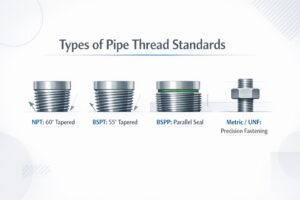
- threaded connection: an NPT-type joining method makes removal and replacement pretty straightforward.
A suitable stainless steel connection should also match the pipe material.
Dimensional Specs Covered – NPS, Schedule, OD, Wall thickness
- Confirm NPS (Nominal Pipe Size).
- Then check Schedule (pipe schedule) for the intended pressure duty.
- Verify actual dimensions.
- OD (Outside Diameter) confirms external measurement.
- wall thickness supports correct pipe sizing and fit-up.
These dimensional specification checks help each stainless steel pipe fitting line up correctly with elbows, tees, and reducers.
Industry Standard Compliance – ASME B16.9, ASTM A403, PED
- Check the governing industry standard:
- ASME B16.9
- Covers dimensions and tolerances for factory-made wrought butt-welding fittings.
- ASTM A403
- Covers wrought stainless steel piping fittings.
- PED (Pressure Equipment Directive)
- Sets relevant EU pressure-equipment regulatory requirement obligations.
- ASME B16.9
Proper compliance and certification records make procurement far less of a headache.
Surface Finish & QA – Pickled and passivated, Electro-polished, MTR & NDT
yuuhuan hongqian can pair the required surface finish with documented quality assurance.
- pickled and passivated: removes contamination and supports corrosion performance.
- electro-polished: produces a smoother surface treatment for cleanliness-sensitive service.
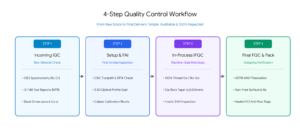
- Verification matters too: an MTR (Material Test Report) confirms material data, while suitable NDT (Non-Destructive Testing) and inspection help identify defects without damaging the fitting.
Question-Based
Picking the right stainless steel pipe fitting comes down to material, joint design, and pressure capacity. These practical questions explain how corrosion protection, flange design, and wall size affect safety and service life without making things overly technical.
How does 316L improve corrosion resistance over 304?
A stainless steel pipe fitting made from 316L stainless steel includes molybdenum, unlike standard 304 stainless steel. That small chemistry change can make a big difference when salt is in the mix.
- In aggressive service:
- Molybdenum content strengthens corrosion resistance against pitting corrosion.
- It also reduces the risk of crevice corrosion in chloride environments, such as coastal and saline process lines.
- At the metal surface:
- A protective passivation layer naturally forms on stainless steel.
- 316L chemistry helps this barrier resist local chloride attack more effectively.
For marine or chemical piping, a 316L stainless pipe fitting from yuuhuan hongqian can therefore be a practical upgrade over 304.
Why choose a flanged connection for high-pressure lines?
A correctly specified flanged connection gives a stainless steel pipe fitting a serviceable joint where high pressure and equipment access both matter.
- Joint performance
- A suitable gasket sits between flange faces.
- Correct bolting applies the clamping force needed for sealing integrity and leak prevention.
- Service access
- Disassembly does not require cutting the pipe.
- Valve replacement, inspection, and maintenance become far easier.
The catch is simple: flange rating, material, gasket, bolts, temperature, and installation all need to match the design conditions. A flange alone does not guarantee safe high-pressure service.
What role does wall thickness play in pressure class ratings?
For a stainless steel pipe fitting, wall thickness directly affects how much internal pressure the metal can resist. A larger pipe schedule commonly means a thicker wall, giving the component more capacity to handle stress.
- Check the specified pressure class or applicable piping standard rather than relying on thickness alone.
- Confirm material strength, because different grades do not share identical allowable stresses.
- Account for operating temperature, corrosion allowance, and dimensions; all can affect pipe integrity.
- Keep the required safety factor between normal operating pressure and failure conditions such as burst pressure.
In short, thicker isn’t automatically rated higher in every case. yuuhuan hongqian stainless steel fittings should be selected by the governing standard and stated ratings, not by wall size alone.
Comparative
Choosing a stainless steel pipe fitting comes down to service conditions, joining method, and how the part was made. Small differences can matter a lot once heat, pressure, or salt enters the mix. Buyers comparing pipe fitting options from yuuhuan hongqian can use these practical contrasts to narrow specifications without making selection a guessing game.
304 stainless steel vs. 316L stainless steel
304 is the cost-friendly stainless steel pipe fitting choice for many water, food, and general industrial lines. Its chromium content and nickel content provide useful corrosion resistance, while 316L adds molybdenum content for tougher service.
- Material choice
- 304
- Delivers good cost-effectiveness in mild environments.
- Handles normal high temperature service when the design standard permits.
- 316L
- Performs better in chloride environments, including salty or chemical exposure.
- Low carbon improves welding characteristics by reducing the risk of corrosion near welded areas.
- 304
For a stainless steel pipe fitting near seawater or chloride-rich process fluids, 316L is generally the safer bet.
Butt weld vs. Socket weld
A butt weld pipe fitting joins end-to-end, producing a cleaner bore and better fluid flow. This design is common on larger lines where lasting joint integrity matters.
Socket weld fittings fit pipe into a recessed socket before the welding process. Alignment is easier on small-bore piping, and suitable designs can carry a high pressure rating. Still, the internal gap may encourage crevice corrosion. Required non-destructive testing, temperature limits, and installation complexity should be checked against the governing code.
Forged vs. Seamless construction
The key distinction starts with the manufacturing process. Forging shapes heated or cold metal under force, refining grain structure and supporting high mechanical strength and fatigue resistance.
Seamless construction, by contrast, avoids a longitudinal welded seam. For each stainless steel pipe fitting, engineers should compare:
- material uniformity and expected defect likelihood
- required wall thickness and pressure capability
- fitting shape, material grade, and applicable specification
In short, “forged” describes how metal is shaped, while “seamless” describes the absence of a seam; the terms are not direct opposites.
Phrase-Style
Choosing a stainless steel pipe fitting gets much easier when four practical details line up: size, pressure capability, finish, and bore geometry. Small mismatches can cause headaches during installation or service. For buyers comparing stainless steel fittings, yuuhuan hongqian can support specification matching while keeping each stainless steel pipe fitting aligned with piping and project needs.
Precision Nominal Pipe Size
A stainless steel pipe fitting should match the connected pipe rather than relying on a nominal label alone.
- Check NPS or DN.
- Confirm pipe diameter and fitting size.
- Match the schedule number, since it affects wall thickness and bore.
- Check recognized dimensional standards.
- This keeps stainless steel pipe and fitting connections lined up properly.
- It also helps avoid the nasty surprise of incompatible parts at installation.
Certified Pressure Class Rating
Pressure selection needs more than a class number on the paperwork.
- Start with the required working pressure and operating conditions.
- Compare the specified pressure class.
- Check temperature limits, because allowable pressure may fall as temperature rises.
- Review supporting requirements.
- Follow relevant ASME standards or specified codes.
- Verify material certification and any stated burst pressure data.
That approach helps ensure each stainless steel pipe fitting suits actual service conditions.
Corrosion-Resistant Surface Finish
Finish choice affects much more than looks.
- Surface finish
- Mill finish may suit general industrial service.
- Passivation supports corrosion resistance by improving the protective oxide layer.
- Cleaner applications
- Electropolishing can lower surface roughness, making cleaning easier.
- Suitable material grade remains essential; polishing cannot rescue the wrong alloy.
For hygienic stainless steel fittings, that distinction is a pretty big deal.
Streamlined Bore Flow
Good internal geometry helps fluids move without needless disruption.
- Size the bore diameter around the required flow rate.
- A smooth bore and clean transitions support better flow efficiency.
- Suitable reducers can limit sudden velocity changes.
- Consider real fluid dynamics.
- Rough or abrupt geometry may increase pressure drop.
- A cleaner internal surface can reduce places where product collects.
For yuuhuan hongqian selection work, matching stainless steel pipe fitting geometry to the connected stainless steel pipe helps elbows, tees, and reducers deliver steadier flow.
Pain-Point-Solving
Small specification gaps can turn a stainless steel pipe fitting order into leaks, mismatched surfaces, or material headaches. Clear connection, finish, and verification rules help buyers get dependable stainless steel components from yuuhuan hongqian without guesswork.
Leaks at joints? Adopt compression fitting solutions
For suitable fluid systems, well-selected compression fittings create mechanical sealing around tube or pipe connections without welding. Still, it is not a case of simply tightening things up and calling it good.
- Connection checks
- Match each stainless steel pipe fitting to the maker’s pressure and temperature ratings.
- Confirm media compatibility before installation.
- Assembly controls
- Prepare clean, correctly cut tubing.
- Follow specified installation torque or tightening instructions rather than guessing.
- Inspect joints for alignment and ferrule seating.
- Pressure-test completed assemblies.
- Record results to demonstrate pressure integrity.
- Investigate leaks before putting the line into service.
- Prepare clean, correctly cut tubing.
Sound installation practice matters just as much as fitting quality.
Inconsistent finishes? Opt for mirror-polished or satin finish
A clear surface finish specification keeps stainless steel parts from arriving with a patchwork look. Buyers can choose mirror-polished surfaces where bright appearance and easy cleaning matter, while a satin finish offers a softer, more uniform look.
Before approving a pipe or fitting, set measurable roughness requirements where needed and define visual acceptance standards. For sanitary applications, surface quality can support hygiene by making deposits easier to spot and remove; suitable finishing may also help preserve corrosion resistance when fabrication and cleaning are properly controlled. This turns subjective aesthetics into a practical inspection target.
Unverified materials? Insist on PMI and Material Test Reports
Wrong alloy grades can look virtually identical, so paperwork and testing need to match the physical stainless component.
- Verify identity
- Use PMI for alloy identification when specified.
- PMI, or positive material identification, checks elemental composition.
- Match results to the required stainless grade.
- Use PMI for alloy identification when specified.
- Verify records
- Review Material Test Reports for chemistry and mechanical properties.
- Link heat numbers to the supplied pipe and fittings.
- Maintain traceability through receiving and production.
- Review Material Test Reports for chemistry and mechanical properties.
- Close the loop
- Resolve unverified materials before installation.
- Keep records supporting material verification, quality assurance, and project compliance.
Scenario-Based
Choosing a stainless steel pipe fitting gets easier when service conditions drive the decision. A Chemical processing line facing sour gas has different needs from a sanitary plant or a salty offshore deck. Grade, surface finish, Corrosion resistance, connection design, and qualification all matter. In practice, the right stainless steel fitting must match the actual job.
Chemical Processing: Super duplex for H2S environments
- Sour process duty
- Super duplex stainless steel combines High strength with strong chloride resistance, making it a practical stainless steel pipe fitting candidate for demanding Process piping.
- In an H2S environment, though, grade alone does not seal the deal.
- Check temperature, H2S partial pressure, chloride level, pH, heat treatment, and hardness against NACE MR0175/ISO 15156.
- Qualification helps control Sulfide stress cracking risk. A pipe fitting that passes ordinary corrosion checks may still be unsuitable for sour service.
Food & Beverage: Mill-finish 316L with hygienic flanges
A 316L stainless steel stainless steel pipe fitting is common in the Food and beverage industry, but “316L” does not automatically mean sanitary.
- Mill finish must meet the required surface condition and roughness.
- Hygienic flanges and Sanitary fittings should avoid product traps and support easy inspection.
- Good Cleanability improves Contamination control; verify weld quality, gasket design, drainage, and the cleaning chemicals used in the process.
For food-contact pipe systems, actual sanitation rules should set the bar.
Offshore Platforms: Brushed finish austenitic fittings with NACE MR0175 compliance
A stainless steel pipe fitting needs material compliance, not just a good-looking surface.
Exposure checks
Offshore platforms place stainless steel in a harsh Marine environment.
Assess Saltwater corrosion, temperature, pressure, and chloride concentration before specifying any fitting.
Material checks
Austenitic stainless steel may suit many duties, but grade limits still matter.
A Brushed finish changes appearance and surface condition; it does not guarantee resistance to Stress corrosion cracking.
Sour-service checks
For Oil and gas applications, confirm documented NACE MR0175 suitability for the actual fluid and operating limits.