Direct CNC Machining Factory for Custom Threaded Brass Inserts and Precision Components
Sourcing reliable, high-precision brass inserts and stainless steel inserts directly from an ISO-certified CNC machining manufacturer is essential to preventing assembly bottlenecks, structural stripping, and costly mold downtime. Operating as a direct CNC manufacturing facility, we specialize in OEM/ODM production of custom threaded brass inserts, high-torque hexagonal molded-in inserts, and corrosion-resistant stainless steel insert solutions built strictly to custom engineering drawings.
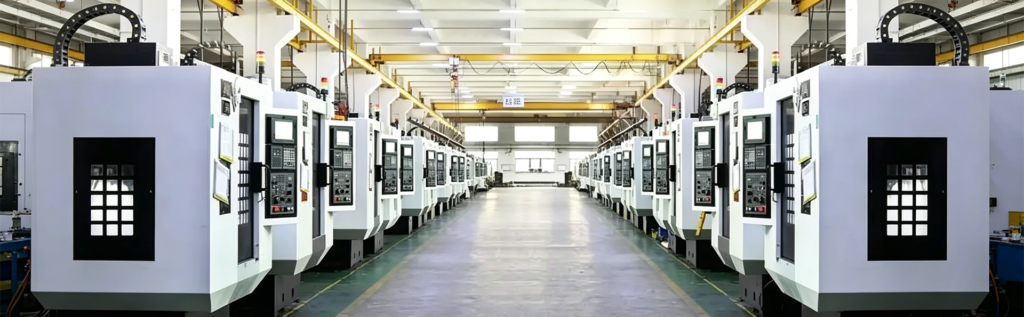
Equipped with over 80 high-speed CNC lathes, Swiss-type automatic turning centers, and precision secondary deburring systems, our factory supports global procurement teams from rapid prototyping to high-volume mass production. Whether your project requires metric M1.0 to M16 threads, imperial UNC/UNF standards, or custom knurled profiles, our engineering team guarantees tight dimensional tolerances down to ±0.01 mm to ±0.02 mm and zero-defect fitment across all high-volume molding operations.
Classification of Threaded Inserts by Installation Method and Function
Selecting the proper mechanical configuration and installation technique directly dictates the joint integrity of plastic, composite, and metal assemblies.
Molded-in Inserts (Injection Molding Hexagonal & Round Inserts)
Molded-in inserts are placed directly onto the mold core pins before the plastic injection cycle. During the shot, molten thermoplastic flows entirely around the insert geometry. Hexagonal bodies provide industry-leading torque resistance, while deep annular undercuts deliver maximum axial pull-out resistance, making them ideal for heavy-load structural joints.
Heat-Set & Ultrasonic Brass Inserts
Engineered specifically for post-mold installation into thermoplastic materials and 3D-printed parts. Heat-set brass thread inserts utilize thermal conduction to melt the surrounding plastic wall during press-in, allowing the polymer to refreeze within the knurl undercuts. Ultrasonic brass threaded inserts utilize high-frequency acoustic vibrations to generate localized frictional heat for fast cycle times.
Press-In & Self-Clinching Inserts
Designed for cold installation into soft plastics, thermoset polymers, or sheet metal without thermal energy. These brass screw inserts and stainless insert variants feature sharp, annular helical ridges and serrated rings that bite directly into the parent bore wall during axial pressing.
Self-Tapping Thread Inserts
Featuring external cutting threads and chip reservoirs, self-tapping inserts cut their own matching threads when driven into pre-drilled holes in hard plastics, aluminum alloys, or cast iron. They provide high resistance to vibration-induced back-out without requiring pre-tapped mating holes.
Wire Thread Inserts (Helicoil Style)
Manufactured from diamond-profile cold-drawn stainless steel spring wire, wire thread inserts are installed into pre-tapped holes to protect soft alloys (such as aluminum and magnesium) against thread stripping, wear, and high-temperature galling.
Knurled Inserts
Featuring straight, diamond (cross), or helical knurling patterns, knurled brass threaded insert components provide high surface contact area and balanced retention forces for both pre-molded and post-molded plastic assemblies.
Solved Engineering Challenges in Automated Injection Molding
Integrating metal inserts into high-speed, automated injection molding environments requires stringent manufacturing controls to avoid critical assembly failures.
Zero-Burr Tolerance: Why Burrs Crush Molds and Stall Automation
In automated insert molding lines, robotic end-effectors pick and place threaded brass inserts onto precision mold core pins. Microscopic burrs at the internal thread entry, lead-in chamfer, or parting line cause severe manufacturing failures:
-
Core Pin Jamming & Scuffing: Burrs prevent the insert from sliding completely to the bottom of the core pin, causing severe scoring on expensive hardened tooling.
-
Catastrophic Mold Crushing: If an insert is held slightly off-seat due to burrs, closing the multi-ton mold press crushes the insert against the opposing cavity steel, resulting in thousands of dollars in tooling repairs and immediate line shutdowns.
-
Our Process Solution: We execute a rigorous zero-burr protocol featuring 60°/90° precision single-point CNC chamfering, high-pressure liquid deburring, dual-stage magnetic/vibratory tumbling, and 100% ultrasonic cleaning to ensure completely clean, burr-free chamfers and threads.
The “Rougher is Better” Paradox: Surface Roughness for Maximum Grip
Unlike fluid-sealing fittings where mirror finishes are required, the outer anchoring surfaces of molded-in brass inserts and stainless steel inserts perform significantly better with controlled micro-roughness:
-
Micro-Mechanical Interlocking: Controlled CNC micro-feed tool marks (Ra 1.6 to 3.2 μm) along the hex flats and groove bottoms create millions of microscopic anchoring sites for molten polymers.
-
Anti-Creep Performance: This surface texture increases frictional resistance at the polymer-metal boundary layer, dramatically boosting resistance against micro-creep, axial pull-out, and radial delamination under dynamic thermal expansion cycles.
High-Torque Hexagon & Deep Annular Groove Anchoring
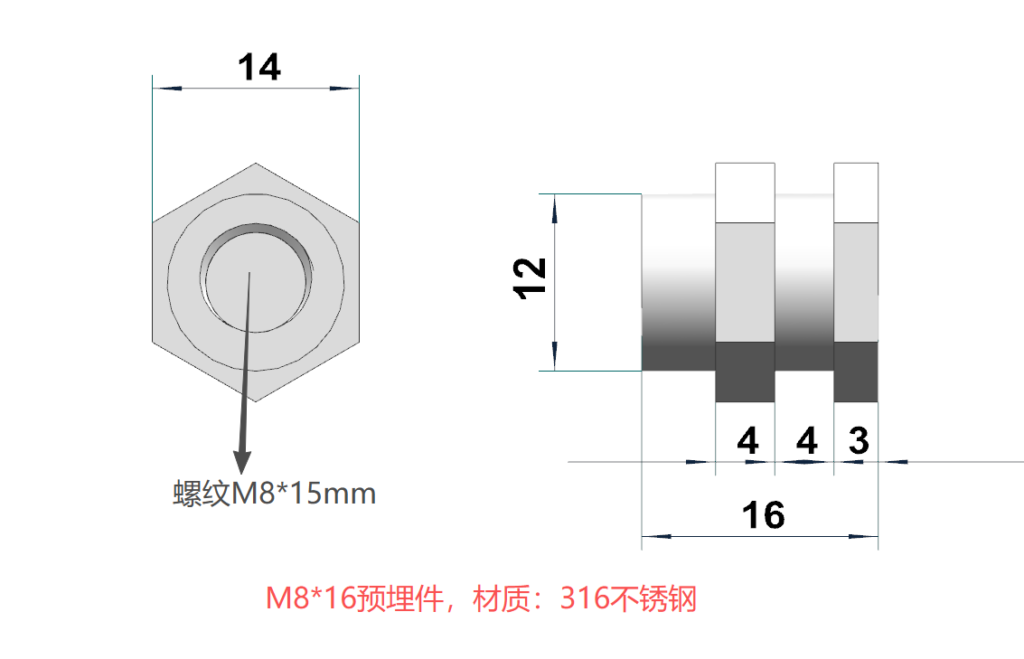
Standard round knurls can shear under extreme bolt tightening torques. Machined solid hexagonal profiles (such as S14 hex stock) physically lock against rotational torque, while wide annular undercut grooves (3 mm to 4 mm width) allow molten resin to form thick, continuous polymer shear rings that prevent axial pull-out.
Material Selection Guide: Brass Inserts vs. Stainless Steel Inserts
Balancing thermal conductivity, mechanical tensile strength, environmental exposure, and overall machining cost is vital when specifying materials for brass insert and stainless insert designs.
| Material Category | Primary Material Grades | Thermal Conductivity | Tensile Strength | Corrosion Resistance | Environmental / Compliance | Ideal Industrial Applications |
| Free-Cutting Brass | C3604 / H59-1 / C36000 | High (~115 W/m·K) | 390–510 MPa | Good (Atmospheric & Oil) | Standard RoHS (Exemption 6c) | High-volume consumer electronics, automotive interiors, and 3D printing heat-set brass inserts. |
| Lead-Free Brass | CW510L / C27450 / Eco Brass | High (~100 W/m·K) | 420–550 MPa | Good (Atmospheric & Potable Water) | 100% RoHS & REACH Compliant; NSF 61 Lead-Free | Drinking water components, medical equipment, and consumer wearables. |
| Free-Machining Stainless Steel | AISI 303 / 1.4305 | Low (~16 W/m·K) | 600–750 MPa | High (Industrial & Mild Acid) | Naturally Lead-Free & Bio-Compatible | High-speed turned stainless steel inserts, instrumentation housings, and high-torque fasteners. |
| Austenitic Stainless Steel | AISI 304 / 1.4301 | Low (~15 W/m·K) | 520–700 MPa | Superior (Oxidizing Acids & Weathering) | FDA Food Contact Approved | Food processing machinery, outdoor marine equipment, and chemical fluid enclosures. |
| Marine-Grade Stainless Steel | AISI 316 / 316L / 1.4404 | Low (~14 W/m·K) | 500–680 MPa | Maximum (Chloride & Salt Spray) | Medical & Marine Grade | Offshore marine hardware, surgical medical devices, and aggressive chemical processing. |
Key Advantages of Brass Threaded Inserts
-
Superior Thermal Transfer: Brass transfers thermal energy rapidly, allowing heat-set machines to install parts in seconds without creating excessive thermal degradation in the surrounding plastic.
-
Natural Anti-Galling: The natural lubricating characteristics of copper alloys prevent stainless steel and carbon steel bolts from thread seizing (galling) during automated high-speed torque driving.
-
High-Speed Machinability: Brass permits high surface cutting speeds on CNC Swiss lathes, significantly lowering unit costs on large production runs.
When to Specify Stainless Steel Inserts
-
Extreme Mechanical Loads: Where high-tensile metric bolts (Class 8.8, 10.9, or 12.9) require severe clamping torque that would otherwise strip soft brass threads.
-
Harsh Chemical & Coastal Environments: In marine spray, acid-washdown food plants, or medical autoclave sterilization, 304 and 316 stainless steel inserts prevent galvanic corrosion and oxidation.
-
High-Temperature Operation: When structural plastic housings operate in engine compartments or industrial ovens exceeding 200°C, stainless steel maintains structural rigidity without thermal creep.
Precision CNC Turning Workflow & Quality Control
Every batch of custom brass thread inserts and stainless steel inserts follows a rigorous, tightly controlled production and inspection sequence:
[Cold-Drawn Hex / Round Bar Stock] ➔ [CNC Swiss Turning & Chamfering] ➔ [Precision Drilling & Tapping] ➔ [Groove & Undercut Forming] ➔ [High-Speed Parting-Off] ➔ [Vibratory Deburring & Centrifugal Drying] ➔ [Ultrasonic Degreasing] ➔ [Automated Optical Sorting & Pin Gaging]
In-Process Quality Assurance Checkpoints
100% Thread Go/No-Go Verification
Internal threads (Metric 6H / Unified 2B) are strictly inspected using calibrated, hardened thread plug gauges to guarantee zero dimensional drift across shifts.
Core Pin Simulation & Automated Feeding Tests
Inserts are tested with precision-ground Go/No-Go core pin fixtures matching client mold pin tolerances (e.g., g6/h6 fits), ensuring smooth automated robotic feeding and zero mold interference.
Cleanliness & Clean Packaging
Finished parts undergo multi-tank ultrasonic cleaning to remove residual cutting oils, micro-chips, and surface fines, followed by vacuum-sealed packaging in dust-free poly bags to prevent transit contamination.
Frequently Asked Questions (FAQ)
Why do molded-in hexagonal brass inserts provide superior pull-out resistance compared to post-mold heat-set inserts?
Molded-in inserts allow molten thermoplastic to flow under high injection pressures (often exceeding 50 to 100 MPa) completely into deep, square-cut annular grooves. This creates a solid, molded-in polymer shear ring that provides significantly higher axial pull-out and torsional break-out strength than localized post-mold melting.
How do you prevent plastic flash from leaking into the insert’s internal threads during injection molding?
We machine tight-tolerance pilot diameters (toleranced to +0.00 / -0.03 mm) and clean 90° sealing shoulders at the front face. This ensures an exact shut-off fit against the mold cavity and core pin shoulders, blocking high-pressure molten plastic from entering the thread chamber.
What dimensional data is required to quote custom brass or stainless steel inserts?
Please provide your 2D engineering drawing (PDF/DWG) with thread specs, overall length, hex/knurl dimensions, and pilot diameters, along with 3D CAD files (STEP/IGES), material grade, target order volume, and details on whether the parts are for insert molding, heat-setting, or press-in assembly.
Request a Direct Factory Quote for Custom Threaded Inserts
Eliminate distributor markups, eliminate mold-damaging burrs, and source precision-machined brass inserts and stainless steel inserts built directly to your CAD blueprints. Contact our engineering team today to submit your RFQ and receive a comprehensive Design for Manufacturability (DFM) review and a direct quote within 24 hours.