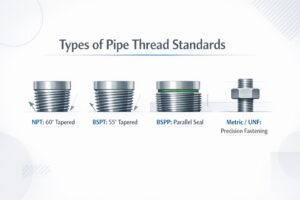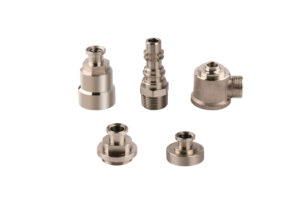
Stainless BSPP fittings serve as critical fluid connectors across modern hydraulic manifolds, pneumatic circuits, and chemical delivery networks where reliable, non-tapered thread integration is required. Unlike tapered thread geometries, a BSPP (British Standard Pipe Parallel, standardized under ISO 228-1 as the “G” thread) connection relies entirely on a dedicated sealing interface rather than thread interference to hold system pressure.
Specifying the correct stainless steel grade, understanding natural surface behavior, and controlling machine shop surface roughness (Ra) dictate whether a parallel port assembly operates for years without incident or fails prematurely due to micro-pitting, thread galling, or seal blowout.
The Reality of Stainless Steel Surface Finish: Why Plating Is Unnecessary
A common misconception among fluid system designers transitioning from carbon steel to stainless steel is the assumption that parts require protective electroplating. For carbon steel, electro-galvanized zinc or electroless nickel is mandatory to prevent rust. For stainless steel, additional plating is neither necessary nor recommended.
Stainless steel contains an alloy base of at least 10.5% chromium. Upon contact with ambient oxygen, it spontaneously generates an ultra-thin, continuous chromium oxide passive film that shields the underlying metal from oxidation.
As-Machined Delivery and Multi-Stage Ultrasonic Degreasing
High-precision stainless fittings are typically shipped in their natural, as-machined condition. The critical post-machining operation is multi-stage ultrasonic degreasing:
-
Residue Evacuation: Thoroughly flushes sulfurized cutting oils, coolants, and microscopic swarf out of blind holes, undercut thread reliefs, and fine internal fluid passages.
-
Contamination Prevention: Eliminates loose metallic dust that could otherwise sit in the thread valleys, oxidize under atmospheric moisture, and create the illusion of rusty stainless steel.
-
Fluid Stream Safety: Delivers clean components ready for immediate assembly into sensitive proportional hydraulic valves or pneumatic blocks without the risk of plating flaking off and clogging orifices.
For applications involving extreme sanitary hygiene or aggressive acid handling, post-machining upgrades such as chemical passivation (ASTM A967) or electropolishing can be implemented to artificially thicken the passive boundary layer or reduce sub-micron surface crests.
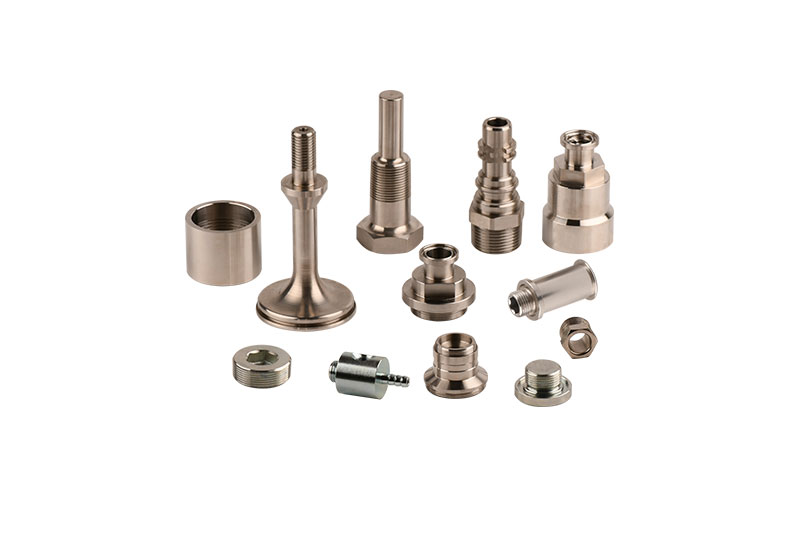
304 vs 316 vs 201: Metallurgical Comparison
Selecting the right grade balances corrosive survival against overall purchasing economics.
| Evaluation Metric | 201 Stainless Steel | 304 / 304L Stainless Steel | 316 / 316L Stainless Steel |
| Alloy Composition | 16–18% Cr, 0.5–1.5% Ni, 5.5–7.5% Mn | 18–20% Cr, 8–10.5% Ni | 16–18% Cr, 10–14% Ni, 2.0–3.0% Mo |
| Pitting Resistance (PREN) | Low (~15–16) | Moderate (~18–20) | High (~23–25) |
| Atmospheric Corrosion | Prone to brown tea-staining and surface rust | Stable in ambient air and non-saline moisture | Impervious to coastal marine air and road salts |
| Chloride / Acid Resistance | Very Poor | Moderate; risk of crevice pitting | Superior; resists pitting and stress cracking |
| Thread Machining Behavior | Abrasive on inserts; high burr tendency | Balanced machinability; manageable chips | Work-hardens quickly; demands rigid tool setups |
| Material Cost Factor | Economy grade | Baseline commercial standard | ~25%–35% premium over 304 |
Why Avoid Grade 201 in Critical Fluid Lines
Grade 201 replaces expensive nickel with manganese and nitrogen. While it exhibits decent tensile yield, its low nickel content makes its protective passive layer fragile. In humid environments, outdoor moisture, or light acid exposure, 201 will quickly develop reddish-brown rust spots. In pressurized industrial fluid fittings, 201 carries an unacceptable risk of thread binding and localized wall perforation.
When 304 Is the Right Choice
Grade 304 is the global workhorse for industrial fluid lines. It provides outstanding structural integrity and rust resistance in municipal water treatment, automated factory air loops, indoor hydraulic power units (HPUs), and standard fuel transfer.
When 316 / 316L Is Mandatory
The definitive advantage of 316 lies in its 2.0% to 3.0% molybdenum (Mo) content. Molybdenum alters the chemistry of the passive layer, drastically resisting localized breakdown from halide ions.
Specify 316 whenever fittings encounter marine salt spray, coastal processing plants, chemical dosing skids, or offshore hydraulic manifolds. In these environments, 304 will often succumb to micro-pitting within thread roots and under elastomeric seals, whereas 316 maintains complete structural integrity.
Machining Tolerances: Understanding Sealing Face Roughness (Ra)
Because a BSPP connection uses parallel threads, mechanical tightening alone will never seal pressurized media. Sealing occurs through an elastomeric or metallic seal compressed against the component’s seating face. The machining quality of this face determines system tightness.
       [ Hex Body ]
           |
       +-------+ <--- Sealing Shoulder Face (Ra 0.8–1.6 μm)
       |       |      (Pairs with Bonded Seal / O-Ring)
       |-------|
       | | | | | <--- Parallel BSPP (G) Male Threads (ISO 228-1)
       | | | | |
       +---+---+ <--- 60° Internal Chamfer Seat (Optional Metal-to-Metal)
Sealing Face Roughness Realities: Ra 0.8–1.6 μm vs. Cheaper Alternatives
-
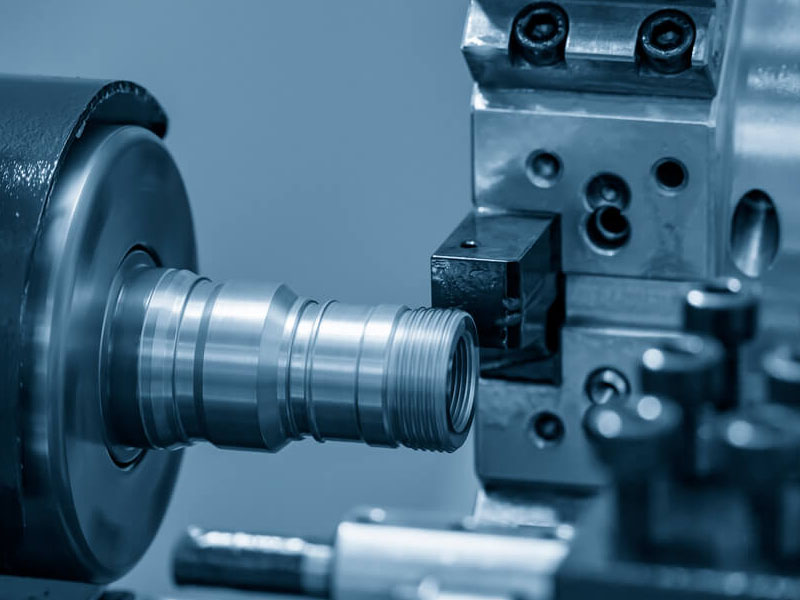
Standard Precision CNC Turning (Ra 0.8–1.6 μm):This is the proven engineering sweet spot for turning sealing faces on CNC lathes. High-rigidity tool holders combined with sharp, PVD-coated carbide inserts produce a consistent, uniform micro-spiral. This profile provides solid mechanical grip against bonded washers (Dowty seals), ED-rings, or flat PTFE gaskets without scratching, cutting, or extruding the elastomer under high working pressures.
-
The Danger of Substandard Machining (Ra 3.2 μm or higher):Some low-tier suppliers drive lathe feed rates too fast to shorten cycle times and cut unit prices, leaving turning faces at Ra 3.2 μm or rougher. These deep, coarse tool marks act as leak paths. Under dynamic pressure spikes or equipment vibration, the rough ridges bite into and tear soft elastomer lips, resulting in weeping fluid leaks.
-
The Reality of Mirror Finishes (Ra 0.2–0.4 μm):An Ra of 0.2–0.4 μm represents a mirror-grade finish that cannot be consistently held by standard CNC turning tools alone. Achieving this requires secondary operations like diamond burnishing, cylindrical lapping, or electropolishing. While necessary for ultra-pure semiconductor or biopharmaceutical valve cavities, requesting an Ra 0.2 μm on a standard industrial hydraulic port adds manufacturing costs without delivering functional sealing gains over a clean Ra 0.8–1.6 μm face.
Sealing Options for Stainless BSPP Assemblies
A stainless BSPP male port typically pairs with one of three primary sealing methods:
-
Bonded Washer (Dowty Seal): An outer metal washer with an integrated inner rubber lip. The seal sits against the machined shoulder and flat housing face, compressing securely as the fitting is torqued down.
-
ED-Seal / Retained O-Ring: The fitting body features a shallow step or undercut that captures an elastomeric ring, preventing outward extrusion when exposed to pulsating hydraulic pressures.
-
60-Degree Inverted Cone (DIN 3863): Uses a metal-to-metal wedging action against a mating hose swivel nut or adapter. This mechanical seal requires accurate angular alignment and smooth, chatter-free chamfer surfaces.
Frequently Asked Questions (FAQ)
Will stainless BSPP fittings rust if left unplated?
High-quality 304 and 316 stainless BSPP fittings do not require electroplating to stay rust-free. They rely on their natural chromium oxide layer, which self-repairs in the presence of air or oxygenated fluids. As long as fittings undergo thorough ultrasonic degreasing to remove residual machining oils and free-iron tool particles, they will remain clean and corrosion-resistant. Low-grade 201 stainless, by contrast, possesses weak surface passivation and will frequently develop rust patches in damp environments.
How do you prevent thread galling when tightening stainless BSPP fittings?
Stainless steel alloys can be prone to cold welding (galling) under high frictional friction. Because BSPP threads are parallel, tightening torque should focus on clamping the sealing washer rather than forcing the threads together. To completely avoid galling:
-
Keep male and female thread surfaces clean, burr-free, and calibrated to ISO 228-1 Class A/B tolerances.
-
Apply a compatible anti-seize lubricant or PTFE paste before assembly.
-
Avoid using high-speed air impact wrenches during assembly.
How are BSPP threads inspected in production?
BSPP threads are parallel and inspected using precision Go and No-Go thread plug gauges (for internal female ports) and thread ring gauges (for external male stems) ground to ISO 228-1 standards. The Go gauge must spin freely through the full engagement length, while the No-Go gauge must not screw on more than two complete turns.
Can 316L and 304 BSPP fittings be mixed in the same manifold?
Mechanically, yes—provided both share identical ISO 228-1 thread profiles, pitches, and compatible sealing shoulders. From a corrosion standpoint, mixing them in aggressive marine or chemical media means the lower-alloy 304 fitting will become the weak point in the assembly, risking premature failure while the 316 components remain unaffected.
Partner with a Precision CNC Machining Specialist
Manufacturing defect-free stainless BSPP fittings requires rigid multi-axis CNC machines, disciplined cutting-tool lifecycles, and calibrated thread gauging.
Whether you need volume production of custom 316L hydraulic adapters, 304 pneumatic connectors, or complex multi-port BSPP manifolds with controlled Ra 0.8–1.6 μm sealing shoulders, our facility is equipped to machine to your exact 2D/3D drawing tolerances.
Submit your CAD/STEP files and PDF drawings today to receive a comprehensive DFM manufacturability evaluation and quotation within 24 hours.