When inspecting metric fasteners on heavy machinery, structural steel frames, or hydraulic pipe flanges, the marking stamped on top of a hex bolt head is the single most critical indicator of its mechanical strength. Among all metric bolt markings, “8.8” is the most widely specified high-strength grade worldwide.
Understanding what the numbers 8.8 represent, how they translate into actual tensile and yield load capacities, and how metric classes compare to imperial SAE grades is essential to avoiding catastrophic joint failure.
As a custom OEM/ODM pipe fitting factory in China and precision CNC machining facility, Yuhuan Hongqian Machinery Co., Ltd. provides this technical breakdown of metric bolt head markings, property classes, and torque calculations.
What Does 8.8 Mean on a Bolt Head? (The ISO 898-1 Marking System)
On a metric fastener, 8.8 represents the fastener’s mechanical property class under the international standard ISO 898-1. The code consists of two numbers separated by a decimal point:
Decoding Metric Class 8.8:
├── First Digit (8)   ──> 8 × 100 = 800 MPa (Nominal Tensile Strength, Rm)
└── Second Digit (.8) ──> 800 × 0.8 = 640 MPa (Nominal Yield Strength, Re)
-
The First Number (8): Represents 1/100th of the nominal tensile strength in megapascals (MPa or N/mm²).
-
Nominal Tensile Strength ($R_m$) = 8 × 100 = 800 MPa (approximately 116,000 PSI). This is the maximum stretching force the bolt can withstand before breaking.
-
-
The Second Number (.8): Represents the yield ratio (the ratio of yield strength to tensile strength multiplied by 10, or 80%).
-
Nominal Yield Strength ($R_e$) = 800 MPa × 0.8 = 640 MPa (approximately 92,800 PSI). This is the load limit beyond which the bolt will permanently stretch and deform.
-
Fasteners stamped with 8.8 are manufactured from medium carbon steel (such as AISI 1045 / Chinese 45# steel) or low-carbon alloy steel (such as 40Cr) and are subjected to Quenching and Tempering (Q&T) heat treatment to achieve their high-tensile core properties.
Metric Property Classes Comparison Table
To understand where Class 8.8 fits in the engineering hierarchy, compare it against standard low-carbon and ultra-high-strength metric classes:
| Property Class | Nominal Tensile Strength (Rm) | Yield-to-Tensile Ratio | Nominal Yield Strength (Re) | Core Material & Heat Treatment |
| 4.6 | 400 MPa | 0.6 | 240 MPa | Low-carbon steel (Q235 / AISI 1020), as-rolled |
| 4.8 | 400 MPa | 0.8 | 320 MPa | Low-carbon steel (Q235), cold-drawn |
| 5.8 | 500 MPa | 0.8 | 400 MPa | Low-carbon steel, cold-worked |
| 8.8 | 800 MPa | 0.8 | 640 MPa | Medium-carbon steel (AISI 1045), Quenched & Tempered |
| 10.9 | 1000 MPa | 0.9 | 900 MPa | Low-alloy steel (40Cr / 35CrMo / AISI 5140), Q&T |
| 12.9 | 1200 MPa | 0.9 | 1080 MPa | High-grade alloy steel (42CrMo / AISI 4140), Q&T |
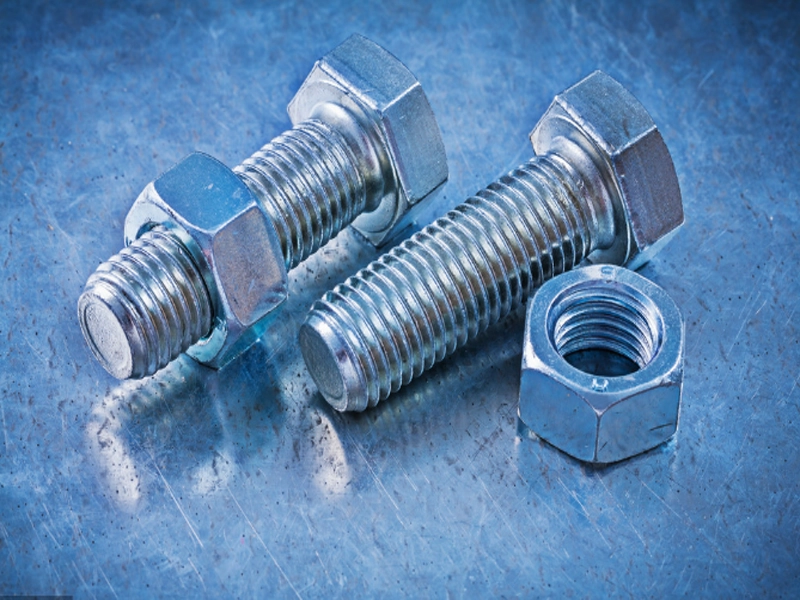
Metric 8.8 vs. Imperial SAE Grades: What Are the Equivalents?
One of the most frequent procurement and engineering questions is how metric 8.8 compares to American SAE grade markings:
Is 8.8 the Same as Grade 5?
Yes. Metric Class 8.8 is the direct functional equivalent of an imperial SAE Grade 5 bolt (identified by 3 radial slash marks on the head).
-
SAE Grade 5: Minimum tensile strength of 120,000 PSI (approximately 827 MPa).
-
Metric Class 8.8: Nominal tensile strength of 800 MPa (approximately 116,000 PSI).Both serve as the standard general-purpose high-strength grade for automotive chassis, machinery frames, and structural joints.
Is an 8.8 Bolt Stronger Than Grade 8?
No. An imperial SAE Grade 8 bolt (marked with 6 radial lines) is significantly stronger than a metric Class 8.8 bolt.
-
SAE Grade 8: Minimum tensile strength of 150,000 PSI (approximately 1034 MPa).
-
Metric Equivalent to SAE Grade 8: Metric Class 10.9 (1000 MPa tensile strength), not Class 8.8.
Is Grade 8.8 or 12.9 Stronger?
Grade 12.9 is 50% stronger than Grade 8.8. A Class 12.9 bolt has a tensile strength of 1200 MPa and a yield strength of 1080 MPa, making it an ultra-high-tensile fastener reserved for extreme-duty applications such as hydraulic manifold blocks, engine cylinder heads, and high-vibration injection molds.
Proper Nut Matching & Recommended Tightening Torques for 8.8 Bolts
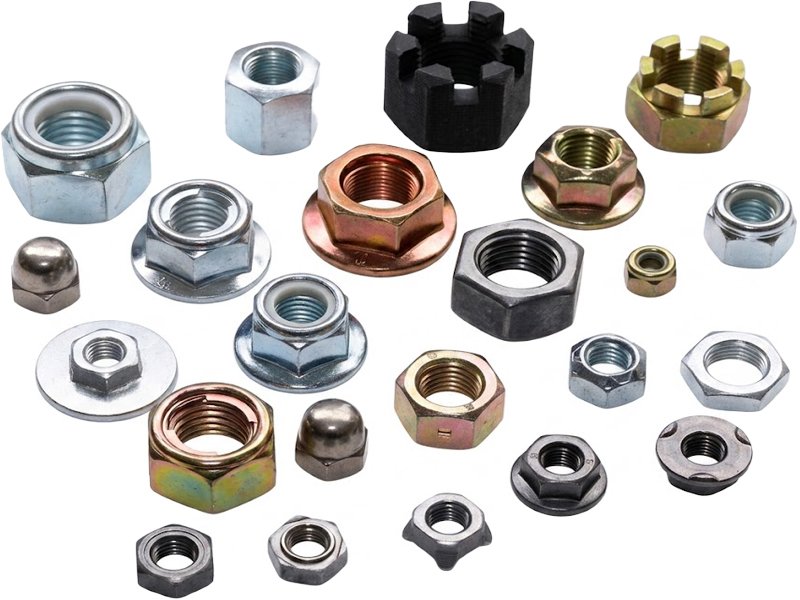
To avoid internal thread stripping under load, a Class 8.8 hex head bolt must always be paired with a Property Class 8 hex nut. Low-grade nuts (Class 4 or 6) will strip their threads before an 8.8 bolt reaches its proof load.
Recommended Tightening Torque for Class 8.8 Bolts (Coarse Thread, Friction Factor $\mu \approx 0.14$)
| Bolt Thread Size | Pitch (mm) | Tensile Stress Area (As, mm²) | Recommended Clamping Torque (N·m) | Recommended Torque (ft-lbs) |
| M6 | 1.00 | 20.1 | 10.5 N·m | 7.7 ft-lbs |
| M8 | 1.25 | 36.6 | 25.5 N·m | 18.8 ft-lbs |
| M10 | 1.50 | 58.0 | 50.0 N·m | 36.9 ft-lbs |
| M12 | 1.75 | 84.3 | 87.0 N·m | 64.2 ft-lbs |
| M14 | 2.00 | 115.0 | 140.0 N·m | 103.0 ft-lbs |
| M16 | 2.00 | 157.0 | 215.0 N·m | 158.5 ft-lbs |
| M20 | 2.50 | 245.0 | 420.0 N·m | 310.0 ft-lbs |
Surface Plating and Corrosion Resistance for 8.8 Fasteners
Because Class 8.8 fasteners are subjected to quenching and tempering, surface electroplating must follow strict corrosion control protocols:
-
Trivalent Zinc Plating (Cr3+ Blue-White / Yellow): The standard finish for indoor and light outdoor machinery, providing 72h to 120h Neutral Salt Spray (NSS) protection without white rust.
-
Zinc-Nickel Alloy Plating (Zn-Ni 12%–16%): A high-durability 8 μm to 12 μm coating offering 720h to 1,000h+ NSS red-rust protection for agricultural machinery and mobile hydraulic fittings.
-
Hydrogen Embrittlement Safety: Although hydrogen embrittlement is far more critical on Class 10.9 and 12.9 bolts, electroplated 8.8 bolts of high hardness (near the upper threshold of 320 HV) still benefit from prompt de-embrittlement baking at 200°C to 220°C for 4 hours.
Frequently Asked Questions (FAQ)
What does 8.8 mean on a bolt head?
On a metric bolt head, “8.8” designates its ISO 898-1 mechanical property class. The first “8” indicates a nominal tensile strength of 800 MPa (N/mm²), and the second “.8” indicates a yield strength equal to 80% of the tensile strength (640 MPa). Grade 8.8 fasteners are medium-carbon, quenched-and-tempered high-strength bolts.
Is an 8.8 bolt stronger than Grade 8?
No. An imperial SAE Grade 8 hex bolt has a tensile strength of 150,000 PSI (1034 MPa), making it stronger than a metric Class 8.8 bolt (116,000 PSI / 800 MPa). SAE Grade 8 is equivalent to a metric Class 10.9 hex bolt.
Is 8.8 the same as grade 5?
Yes. Metric Class 8.8 and imperial SAE Grade 5 are functional equivalents. SAE Grade 5 has a tensile strength of 120,000 PSI (827 MPa), closely aligning with the 800 MPa rating of Class 8.8.
Is Grade 8.8 or 12.9 stronger?
Grade 12.9 is significantly stronger than Grade 8.8. Class 12.9 hex bolts offer 1200 MPa tensile strength and 1080 MPa yield strength—50% higher tensile capacity than Class 8.8 bolts (800 MPa tensile / 640 MPa yield).
Source Custom High-Strength Bolts & Pipe Fittings from Yuhuan Hongqian Machinery
Yuhuan Hongqian Machinery Co., Ltd. is a professional OEM/ODM manufacturer specializing in precision CNC turned fittings, hydraulic adapters, high-strength threaded fasteners, and custom sleeve nuts in Zhejiang, China.
-
Material Traceability: Full EN 10204 3.1 Mill Test Certificates (MTC) accompanying every production batch (AISI 1045, 40Cr, 20#, Q235B, 316L).
-
Precision CNC Capabilities: Tight linear tolerances held within ±0.01 mm, burr-free thread profiles for BSPP, BSPT, NPT, and Metric ISO threads.
-
Strict Quality Verification: In-process thread plug/ring gauge checks, digital profile projection, and salt spray test verification.
Need high-precision custom fasteners or hydraulic fittings?
Contact our engineering team today to submit your RFQs, CAD drawings, or sample requirements for an immediate manufacturing assessment and competitive quote.