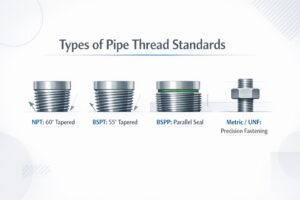
If you are looking for a comprehensive BSPP thread chart and a complete British pipe thread chart, understanding the fundamental engineering differences between parallel and tapered pipe connections is essential for leak-free fluid, pneumatic, and hydraulic systems.
Pipe threads play a critical role in high-pressure fluid and gas systems across industries such as hydraulics, pneumatics, automotive manufacturing, oil and gas, and general industrial automation. Outside North America, the British Standard Pipe (BSP) system remains the dominant connection standard across Europe, Asia, and the Middle East. Despite their shared lineage, BSPP (parallel) and BSPT (tapered) threads operate on fundamentally different sealing mechanisms and are not interchangeable. Misidentifying these profiles leads to catastrophic pressure blowouts, thread galling, and costly field maintenance.
This comprehensive engineering guide explains what is BSP thread, clarifies the core differences in BSP vs BSPP vs BSPT, provides complete dimensional data charts, and outlines professional CNC manufacturing standards for custom fluid fittings.
1. What is BSP Thread? (British Standard Pipe Overview)
British Standard Pipe (BSP) is an internationally recognized family of technical standards for screw threads used on pipes, valves, manifolds, and fittings. Originally standardized by Sir Joseph Whitworth in the 19th century, BSP threads are defined by a 55° Whitworth thread angle with symmetrically rounded crests (peaks) and roots (valleys).
When engineers and procurement specialists ask “what is BSP thread”, they are referring to a parent standard that branches into two functional forms:
-
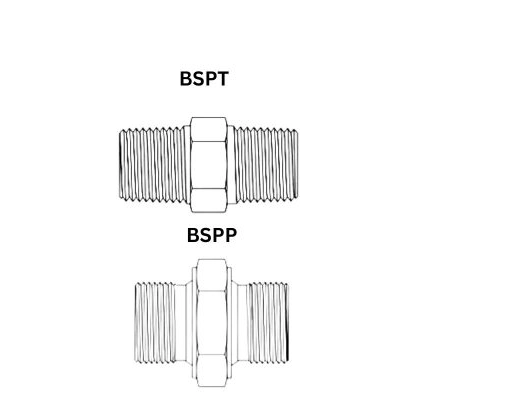
BSPP (British Standard Pipe Parallel): Straight, non-tapering threads requiring an external sealing washer, O-ring, or elastomeric gasket.
-
BSPT (British Standard Pipe Taper): Tapered threads that achieve a mechanical pressure-tight seal directly through thread interference.
Are BSP and BSPP the Same?
A frequent source of procurement errors is assuming BSP and BSPP are identical terms:
-
BSP is the general thread standard family.
-
BSPP is one specific parallel configuration within the BSP family.
-
BSPT is the tapered configuration within the BSP family.
Procurement Rule: Specifying simply “BSP” on engineering drawings or purchase orders is ambiguous. Machining facilities and buyers must explicitly state BSPP (G) or BSPT (R/Rc) prior to production.
2. Design and Sealing Differences: BSPP vs. BSPT
What is BSPP Thread? (British Standard Pipe Parallel)
BSPP threads (governed internationally by ISO 228-1 and BS 2779, designated by the letter G) feature constant major and minor diameters along their entire engaged length.
Because parallel threads do not achieve metal-to-metal interference fit, the thread flanks do not create a seal. A BSPP fitting relies entirely on external sealing elements:
-
Bonded Seals (Dowty Washers): Compressed against a machined flat shoulder.
-
Elastomeric O-Rings: Retained in precision-machined face grooves.
-
ED-Seals (DIN 3852-E): Seated in specialized port counterbores.
-
60° Conical Cone Seats: Metal-to-metal spherical/conical seating faces.
What is BSPT Thread? (British Standard Pipe Taper)
BSPT threads (governed by ISO 7-1, BS 21, and EN 10226, designated by R for external and Rc/Rp for internal threads) have a uniform 1:16 taper ratio (an angle of ≈ 1.789° / 1° 47′ relative to the centerline).
As a male R thread is tightened into a female Rc or Rp port, the tapered profiles compress against one another. This progressive thread deformation creates a self-sealing mechanical joint. In practice, PTFE tape or anaerobic thread sealant paste is applied to fill minor microscopic surface imperfections and eliminate spiral leakage paths.
3. Detailed Comparison: BSPP vs. BSPT Threads
| Feature | BSPP (G Thread – Parallel) | BSPT (R / Rc Thread – Tapered) | NPT / NPTF (American Standard) |
| Standard Specifications | ISO 228-1, BS 2779, DIN ISO 228 | ISO 7-1, BS 21, EN 10226 | ANSI/ASME B1.20.1 (NPT), B1.20.3 (NPTF) |
| Thread Form | Parallel / Straight (Cylindrical) | Tapered (1:16 Ratio) | Tapered (1:16 Ratio) |
| Thread Angle | 55° Whitworth | 55° Whitworth | 60° American National |
| Crest & Root Shape | Rounded | Rounded | Flat / Truncated |
| Sealing Method | O-Ring, Bonded Seal, ED-Seal, 60° Cone | Flank metal interference + Sealant | Thread interference + Sealant (NPT) / Dryseal (NPTF) |
| Thread Diameter | Constant along length | Gradually decreases toward nose | Gradually decreases toward nose |
| Designation Markings | G (e.g., G 1/2″, G 1/4″ A/B) | R (Male), Rc (Female), Rp (Internal Parallel) | NPT, NPTF |
| Assembly Characteristics | Fast, repeatable, low over-tightening risk | Progressive torque, requires torque control | Progressive torque control |
| Interchangeability | Not self-sealing; requires port face | Not interchangeable with BSPP | Incompatible with 55° BSP systems |
4. Are BSPT and BSPP Threads Compatible?
Short Answer: No. BSPT and BSPP threads are generally not compatible for direct connection.
The Engineering Explanation
-
Geometric Mismatch: BSPT threads taper along their length, while BSPP threads remain perfectly straight.
-
Incompatible Sealing Locations: BSPT seals along the thread flanks, whereas BSPP seals on the port face or shoulder.
-
The False-Tightness Risk: A male BSPT fitting can often thread 1 to 2 turns into a female BSPP (G) port and feel mechanically tight due to localized flank friction. However, because thread flank engagement is partial and improper, the connection will fail and leak under pressure.
-
The Exception: ISO 7-1 allows a male BSPT tapered thread (R) to mate with an engineered Rp internal parallel thread, provided a suitable thread sealant compound is used. For all other configurations, engineered conversion adapters must be utilized.
5. Complete British Standard Pipe Thread Charts
BSPP (G) Thread Dimensional Data (ISO 228-1)
Use this british straight pipe thread chart to verify pitch, major/minor diameters, and tapping drill sizes for parallel bsp threads:
| Marking / Nominal Size | Pitch (TPI) | Pitch (mm) | Male Major OD (mm) | Pitch Dia (mm) | Female Minor ID (mm) | Thread Height (mm) | Tap Drill Size (mm) |
| G 1/8″ | 28 | 0.907 | 9.728 | 9.147 | 8.566 | 0.581 | 8.80 |
| G 1/4″ | 19 | 1.337 | 13.157 | 12.301 | 11.445 | 0.856 | 11.80 |
| G 3/8″ | 19 | 1.337 | 16.662 | 15.806 | 14.950 | 0.856 | 15.25 |
| G 1/2″ | 14 | 1.814 | 20.955 | 19.793 | 18.631 | 1.162 | 19.00 |
| G 5/8″ | 14 | 1.814 | 22.911 | 21.749 | 20.587 | 1.162 | 21.00 |
| G 3/4″ | 14 | 1.814 | 26.441 | 25.279 | 24.117 | 1.162 | 24.50 |
| G 7/8″ | 14 | 1.814 | 30.201 | 29.039 | 27.877 | 1.162 | 28.25 |
| G 1″ | 11 | 2.309 | 33.249 | 31.770 | 30.291 | 1.479 | 30.75 |
| G 1-1/4″ | 11 | 2.309 | 41.910 | 40.431 | 38.952 | 1.479 | 39.50 |
| G 1-1/2″ | 11 | 2.309 | 47.803 | 46.324 | 44.845 | 1.479 | 45.25 |
| G 2″ | 11 | 2.309 | 59.614 | 58.135 | 56.656 | 1.479 | 57.00 |
| G 2-1/2″ | 11 | 2.309 | 75.184 | 73.705 | 72.226 | 1.479 | 72.50 |
| G 3″ | 11 | 2.309 | 87.884 | 86.405 | 84.926 | 1.479 | 85.50 |
| G 4″ | 11 | 2.309 | 113.032 | 111.551 | 110.072 | 1.479 | 110.50 |
BSPT (R / Rc) Thread Dimensional Data (ISO 7-1)
Use this british standard pipe thread chart for tapered BSP thread dimensions and pitch diameters at the gauge plane:
| Nominal Size (NPS) | Threads per Inch (TPI) | Pitch (mm) | Gauge Major OD (mm) | Pitch Dia (mm) | Minor ID (mm) | Taper Ratio |
| 1/8″ | 28 | 0.907 | 9.728 | 9.147 | 8.566 | 1:16 |
| 1/4″ | 19 | 1.337 | 13.157 | 12.301 | 11.445 | 1:16 |
| 3/8″ | 19 | 1.337 | 16.662 | 15.806 | 14.950 | 1:16 |
| 1/2″ | 14 | 1.814 | 20.955 | 19.793 | 18.631 | 1:16 |
| 3/4″ | 14 | 1.814 | 26.441 | 25.279 | 24.117 | 1:16 |
| 1″ | 11 | 2.309 | 33.249 | 31.770 | 30.291 | 1:16 |
| 1-1/4″ | 11 | 2.309 | 41.910 | 40.431 | 38.952 | 1:16 |
| 1-1/2″ | 11 | 2.309 | 47.803 | 46.324 | 44.845 | 1:16 |
| 2″ | 11 | 2.309 | 59.614 | 58.125 | 56.656 | 1:16 |
| 2-1/2″ | 11 | 2.309 | 75.184 | 73.705 | 72.226 | 1:16 |
| 3″ | 11 | 2.309 | 87.884 | 86.405 | 84.926 | 1:16 |
| 4″ | 11 | 2.309 | 113.030 | 111.551 | 110.072 | 1:16 |
Machinist’s Technical Tip: When tapping internal BSPP threads in tough stainless steels (e.g., SS316L) versus free-cutting steels (e.g., 12L14), tap drill diameters can be adjusted by +0.1 mm to reduce tap loading and galling while maintaining standard ISO 228-1 Class A thread depth.
6. How to Identify a BSPP vs. BSPT Fitting Accurately
Follow this 3-step inspection procedure in the workshop or QC lab to correctly identify unknown fittings:
| Step | Inspection Method | Key Observation Indicator | Determination / Thread Type |
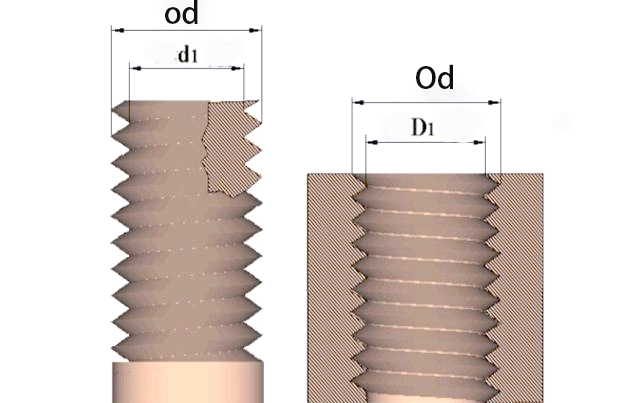
| Step 1: Caliper Check | Measure Male OD or Female ID at the first, middle, and last engaged threads |
• Constant diameter across full length
• Diameter narrows toward the nose/bottom
|
= Parallel Thread (BSPP / Metric / NPSM)
= Tapered Thread (BSPT / NPT)
|
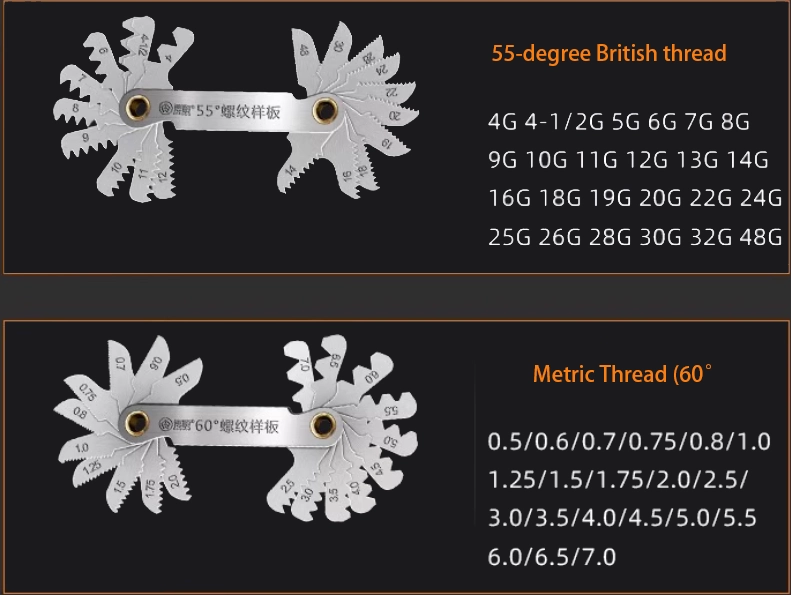
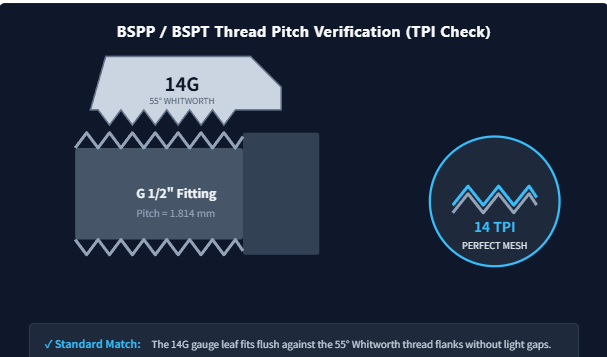
| Step 2: Pitch Gauge | Fit 55° and 60° thread pitch leaves directly to the thread flanks |
• 55° profile matching 11, 14, 19, or 28 TPI
• 60° profile matching imperial TPI
• 60° profile matching metric pitch (mm)
|
= British Standard (BSPP / BSPT)
= American Standard (NPT / NPSM / UN)
= Metric Thread (ISO M-series)
|
| Step 3: Sealing Seat | Inspect the fitting shoulder, nose chamfer, and port counterbore |
• Flat face, O-ring groove, or 60° cone
• Plain threaded shank without mechanical seat
|
= Confirmed BSPP Parallel Connection
= Tapered Thread (Interference seal with tape/paste)
|
Step 1:Caliper Check
Step 2 :Pitch Gaug
7. Common Fitting Selection & Assembly Mistakes to Avoid
-
Assuming BSPP and BSPT Are Directly Interchangeable: Forcing male tapered threads into parallel female ports causes uneven stress concentrations, damaged threads, and leaks under pressure.
-
Ignoring Sealing Face Requirements on BSPP: Applying Teflon tape around parallel BSPP threads is ineffective; parallel fittings require an O-ring, ED seal, or bonded washer against a machined face.
-
Over-Torquing BSPP Components: Because BSPP does not seal on the threads, excessive torque will crush bonded washers or strip internal aluminium/brass threads without improving sealing performance.
-
Using Incorrect Thread Sealants on BSPT: Relying purely on dry metal contact for BSPT joints at elevated pressures will cause micro-leakages. Always apply quality PTFE tape or anaerobic sealant.
-
Omitting Thread Standards on Technical RFQs: Stating generic terms like “1/2 inch BSP” on purchase orders causes manufacturing delays. Always specify G 1/2″ or R 1/2″.
8. Manufacturing Excellence in Custom CNC Threaded Fittings
High-reliability british standard pipe thread fittings require precise multi-axis CNC turning, strict Go/No-Go thread gauging, and dedicated anti-corrosion surface treatments.
Material Specializations
-
Carbon Steels (20#, 45#, 12L14, 11SMnPb30): Superior machinability, high tensile strength, and impact resistance for industrial hydraulic adapters, manifolds, and fluid power blocks.
-
Stainless Steels (SS304, SS316, SS316L, 316Ti): High corrosion resistance for chemical processing lines, marine equipment, oil and gas piping, and clean-in-place (CIP) food systems.
Industrial Surface Treatments for Carbon Steel
-
Zinc Plating (Trivalent Clear/Blue, Yellow, Black Zinc): Cost-effective rust prevention conforming to international RoHS directives.
-
Zinc-Nickel Alloy Plating (Zn-Ni): Premium surface protection exceeding 1,000+ hours of neutral salt spray testing (ASTM B117) without red corrosion.
-
Electroless Nickel Plating (ENP / Chemical Nickel): Delivers a uniform, hard, and wear-resistant nickel-phosphorus layer across complex internal threads and blind cavities.
-
Black Oxide (Blackening): Preserves fine dimensional tolerances while offering baseline corrosion protection with rust-preventive oil.
-
Rust-Preventive Oils & Passivation: Solvent-based or water-displacing protective oils for export sea freight; nitric/citric acid passivation for all stainless steel fittings.
Quality Control & Tolerances
-
ISO 228-1 Class A & B Compliance: Precision turning within Class A tight limits for high-pressure hydraulic ports.
-
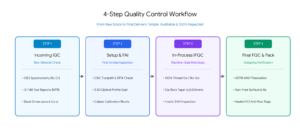
100% Go/No-Go Gauge Verification: Every production batch is verified using calibrated thread ring gauges (male) and plug gauges (female) to guarantee zero-defect field installation.
9. Frequently Asked Questions (FAQ)
Q1: Can a BSPP male thread screw into a BSPT female port?
Answer: While a BSPP male (G) thread can physically engage the initial threads of an internal tapered port (Rc), it cannot achieve a pressure-tight seal. BSPP fittings require a flat machined face or O-ring recess, which tapered ports lack. Always match parallel males with parallel ports and tapered males with tapered ports.
Q2: How can I tell BSPP apart from NPT without special gauges?
Answer: BSPP features a 55° thread angle with parallel (constant) outer diameter, whereas NPT features a 60° thread angle with a 1:16 continuous taper. Measuring the outside diameter with vernier calipers along the thread length instantly distinguishes straight BSPP from tapered NPT.
Q3: What is the difference between ISO 228-1 Class A and Class B BSPP threads?
Answer: Class A and Class B define manufacturing tolerances for external (male) G threads. Class A has a tighter pitch diameter tolerance band, designed for critical high-pressure hydraulic ports. Class B offers wider tolerances suitable for general commercial plumbing.
Q4: Does BSPP require thread sealant tape (PTFE)?
Answer: No. Wrapping PTFE tape around parallel BSPP threads is ineffective because fluid travels along the helical root path. BSPP joints seal on the shoulder or cone using an elastomeric O-ring, ED seal, bonded washer, or 60° chamfer.
10. Partner with Yuhuan Hongqian Machinery for Custom CNC Fitting Manufacturing
When your hydraulic, pneumatic, or mechanical assemblies demand zero-defect precision, sourcing components directly from a dedicated manufacturing facility eliminates quality variations.
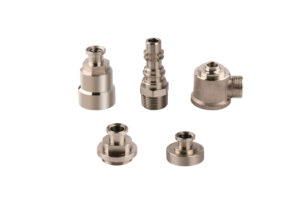
Yuhuan Hongqian Machinery is a direct OEM/ODM machining factory and supplier based in China, specializing in precision custom CNC machining of high-integrity threaded components and pipe fittings.
Why Partner with Yuhuan Hongqian Machinery?
-
Dedicated OEM/ODM Custom Component Manufacturing: We focus purely on high-precision customized component machining according to your 2D/3D engineering drawings (no finished product assembly).
-
Full Thread Standard Coverage: Reliable CNC turning of BSPP (G), BSPT (R/Rc), NPT, NPTF, Metric, and UN/UNF threads with surface finishes down to Ra 0.8 μm.
-
Broad Material Expertise: High-volume turning of 304, 316, 316L stainless steel, carbon steel (20#, 45#), alloy steel, and brass.
-
Comprehensive Protective Finishes: Zinc-Nickel alloy plating, electroless nickel (ENP), trivalent zinc plating, black oxide, passivation, and anti-rust oils.
-
100% Gauge Inspection: Systematic thread plug and ring gauge verification to ensure flawless on-site assembly.
Request a Quote for Your Custom Threaded Fittings
Looking for a reliable China manufacturing partner for custom BSPP, BSPT, NPT, or NPTF fittings? Send your 2D drawings (PDF/DWG/DXF) or 3D CAD models (STEP/IGS) to our engineering team today to receive a factory-direct quotation and DFM feedback within 24 hours.