In modern fluid management, high-pressure hydraulics, chemical transfer lines, and compact skid systems, standard pipe components often fail to meet exact system constraints. When navigating tight equipment envelopes, dynamic thermal cycling, or high operating pressures, generic components frequently cause alignment interference, turbulence, and costly joint leaks.
Engineered elbow fittings and purpose-built elbow pipe fitting solutions bridge this operational gap. Unlike simple straight adapters turned from round bar stock, angular pipe components present unique metallurgical and manufacturing challenges. Understanding blank-forming tooling options, production volume dynamics, and precision CNC finishing capabilities is essential for sourcing high-integrity, leak-free fluid systems.
Sourcing Reality: Off-the-Shelf vs. Volume Application-Specific Elbow Fittings
Elbow components feature complex three-dimensional, angular profiles. Because of their non-linear geometries, producing elbows requires a clear understanding of production methods and tooling investments.
+-----------------------------------------------------------------------------+
|                          ELBOW SOURCING DECISION RULE                       |
+-----------------------------------------------------------------------------+
|                                                                             |
|  [Low-Volume Standard Needs (5–50 pcs)]                                     |
|  └──> Direct Recommendation: Buy off-the-shelf from stockists/distributors |
|       (Avoid high per-piece tooling amortization and tooling wait times)     |
|                                                                             |
|  [Volume Tailored / Non-Standard Designs]                                   |
|  └──> Direct Recommendation: Source from a Custom OEM Manufacturer          |
|       (Tooling costs amortize across volume; full design freedom)           |
|                                                                             |
+-----------------------------------------------------------------------------+
Low-Volume Standard Configurations
For standard 90° or 45° connections in small quantities (5 to 50 pieces), commissioning custom tooling is rarely cost-effective. Direct sourcing from commercial stockists or component distributors eliminates tooling wait times and setup amortization costs.
Production-Scale Custom Requirements
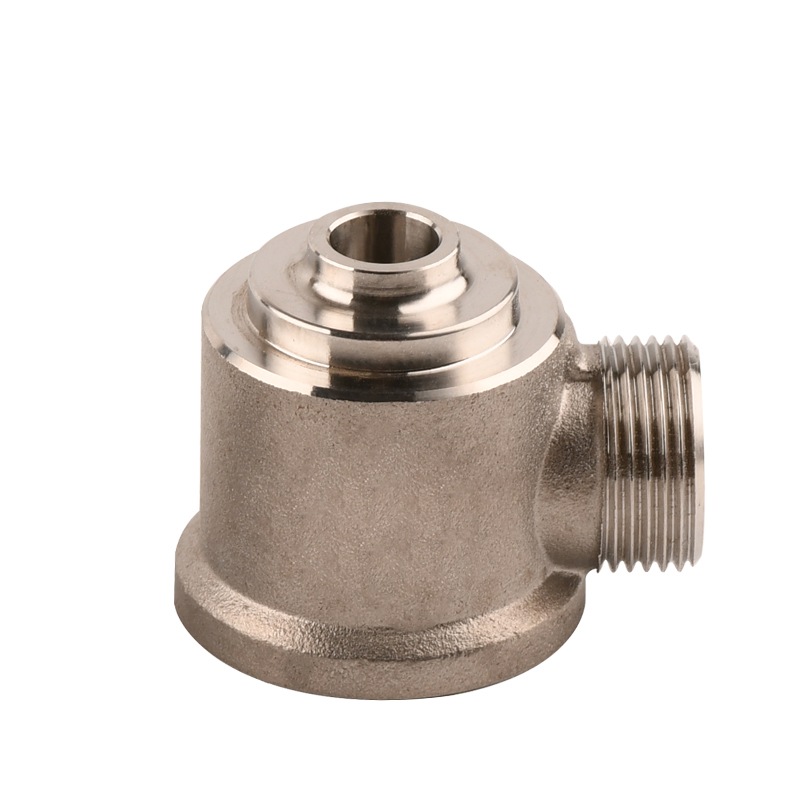
When projects demand non-standard bend angles, hybrid cross-standard threads, reinforced high-pressure wall profiles, or special stainless alloys, working directly with an OEM elbow fittings manufacturer becomes the most reliable, cost-effective path. Tooling investments amortize rapidly across production runs, delivering fully optimized components built to your exact specifications.
2 Primary Blank-Forming Technologies: Hot Forging vs. Silica Sol Casting
Manufacturing application-specific elbow blanks relies on two primary metallurgical processes. Each route dictates distinct tooling timelines, grain structures, and secondary CNC machining workflows.
1. Hot Forging (Closed-Die Hot Stamping)
Tooling Lead Time & Blank Structure
Hot forging tooling typically requires an engineering and fabrication lead time of approximately 15 days. The resulting blank is 100% solid, characterized by dense, aligned metal grain flow with zero internal gas or sand porosity.
Secondary CNC Machining Workflows
Because hot-forged blanks are completely solid, CNC machining centers must drill and bore internal flow passages from both ends before single-point threading. While this secondary deep-hole drilling increases cycle times and tool insert wear, it delivers maximum burst pressure resistance for critical hydraulic systems.
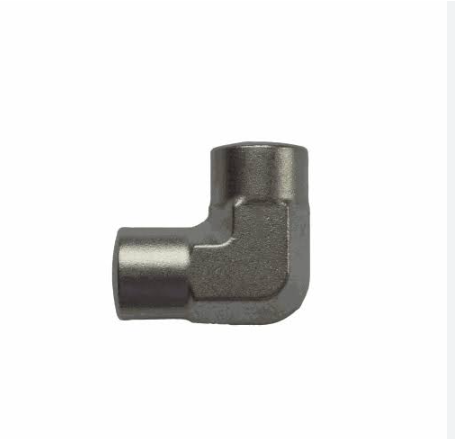
Hot forging blank : can not be forging out the hole and provide clear logo .
2. Silica Sol Precision Investment Casting (Lost Wax)
Tooling Lead Time & Blank Geometry
Silica sol casting tooling generally requires an engineering and mold fabrication window of approximately 30 days. This process utilizes precision aluminum wax-injection tooling, automated ceramic shell building, dewaxing, and high-temperature pouring to produce near-net-shape hollow blanks.

Silica sol investment casting hollow elbow pipe fitting blank with pre-formed flow bore and clear custom trademark marking
Secondary CNC Machining Workflows
Unlike solid forgings, cast hollow blanks already contain pre-formed internal fluid passages. Secondary CNC turning operations eliminate the need for rough internal drilling, moving directly to port facing, chamfering, and precision thread single-pointing. This significantly reduces cycle times, minimizes chip waste, and lowers tooling insert consumption on high-volume runs.
Technical Comparison of Blank-Forming Routes
| Evaluation Metric | Hot Forging (Hot Stamping) | Silica Sol Investment Casting |
| Tooling Lead Time | Approximately 15 days | Approximately 30 days |
| Internal Blank Structure | 100% Solid core (ultra-dense, high fatigue strength) | Cast hollow internal bore (near-net shape) |
| Secondary CNC Operations | Requires heavy drilling, boring, and threading | Direct port facing and CNC thread cutting (no drilling) |
| Porosity & Burst Integrity | Zero gas/sand porosity; ideal for 6,000–15,000 PSI | Smooth surface finish; requires strict pore control |
| Best Application Fit | Severe high-pressure hydraulics, critical delivery schedules | Complex internal flow shapes, high-volume recurring orders |
Why Custom OEM Machine Shops Outperform Commodity Standard Plants
The operational models of high-volume commodity factories and specialized custom manufacturing facilities differ significantly when handling complex, non-standard engineering drawings.
+------------------------------------------------------------------------------+
|             STANDARD COMMODITY PLANT   vs.   SPECIALIZED CUSTOM FACTORY      |
+------------------------------------------------------------------------------+
|  Rigid high-volume production lines   |  Flexible CNC multi-axis cells       |
|  Single-product repetitive setups     |  Rapid fixture and tooling DFM       |
|  Piece-rate operators; loose QC       |  Skilled machinists; 100% inspection |
|  High scrap rates on drawing changes  |  Proactive issue resolution at DFM   |
+------------------------------------------------------------------------------+
Production Agility and Tooling Setup
Commodity manufacturing plants operate locked, single-product assembly lines configured for millions of identical standard units. Introducing tight dimensional tolerances, compound angles, or non-standard thread depths disrupts standard workflows, leading to high scrap rates. In contrast, custom machine shops utilize flexible multi-axis CNC lathes and custom chuck tooling designed for agile print-to-part production.
Workforce Competence and Quality Control Culture
Specialized custom manufacturers employ experienced CNC setup technicians and quality inspectors trained in Geometric Dimensioning and Tolerancing (GD&T). Rather than relying on simple piece-rate visual sorting, custom machinists actively monitor tool wear, spindle runout, and surface roughness parameters throughout every batch.
Proactive Design for Manufacturability (DFM)
A custom manufacturing partner conducts thorough upfront DFM reviews before cutting metal. By identifying potential tooling bottlenecks, inadequate tool relief grooves, or uneven draft angles on initial 3D models, custom engineering teams resolve manufacturing issues early in the prototyping phase.
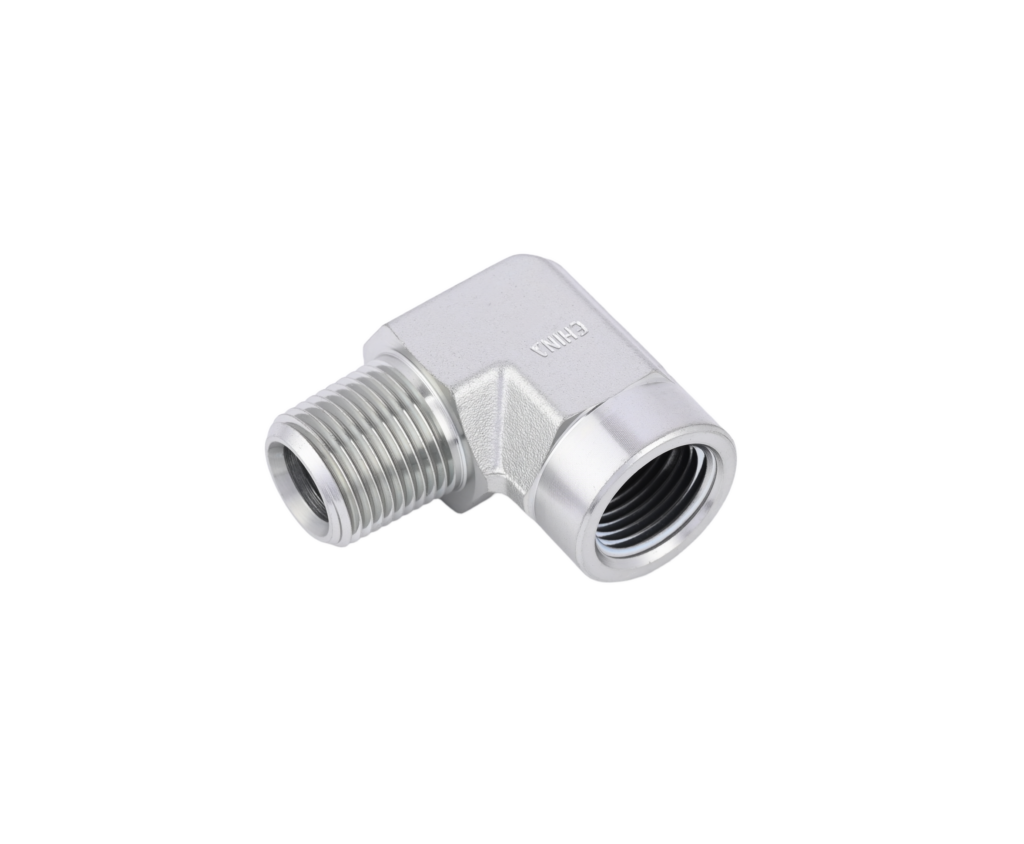
4 Engineering Dimensions for Application-Specific Elbow Fittings
A capable manufacturing partner tailors every elbow pipe fitting across four essential functional parameters:
1. Spatial Envelope and Angle Customization
Non-Standard Bend Angles
Precision CNC milling and turning cells produce non-standard angles such as 30°, 60°, 120°, or multi-plane compound configurations to bypass equipment obstacles.
Low-Profile Drop Lengths and Bulkheads
Custom center-to-face drop dimensions fit tight manifold cavities, while extended male thread lengths support secure panel and bulkhead pass-through installations.
Monolithic Reducing Elbows
Integrating directional turning with line reduction into a single body eliminates intermediate hex reducing bushings, removing potential leakage paths.
2. Cross-Standard Hybrid Thread Ports
Tapered to Parallel Conversions
-
Port 1: Male NPT/NPTF (ANSI/ASME B1.20.1 / B1.20.3) 60° taper thread.
-
Port 2: Female BSPP (ISO 228-1) with an integrated O-ring sealing groove or spot-faced bonded seal seat.
Metric and Hydraulic Flared Interfaces
-
Port 1: Male Metric ISO 6149 / ISO 261 port with elastomeric seal cavity.
-
Port 2: Male JIC 37° flare (SAE J514) or O-Ring Face Seal (ORFS) mechanical connection.
3. High-Performance Alloy Selection
Austenitic Stainless Steels
-
SS304 / SS304L (1.4301 / 1.4307): General industrial, food, and beverage applications.
-
SS316 / SS316L (1.4401 / 1.4404): Enhanced pitting resistance in chloride and acidic environments.
High-Temperature and Duplex Alloys
-
SS321 / SS316Ti: Titanium-stabilized alloys resistant to carbide precipitation during high-temperature exhaust cycles.
-
Duplex 2205 (S32205 / S31803) & Super Duplex 2507 (S32750): Superior yield strength and resistance to stress corrosion cracking in subsea oil, gas, and desalination systems operating from 5,000 to 15,000 PSI.
4. Internal Flow Bore Optimization and Surface Finishes
Radius-Blended Flow Junctions
CNC-blended internal junction radii replace abrupt 90° intersections, reducing fluid shear, system cavitation, and downstream pressure drop.
Surface Roughness Control
Standard internal bore surfaces are finished to Ra 0.8–1.6 μm, with optional electropolishing achieving Ra ≤ 0.4 μm for ultra-clean semiconductor and pharmaceutical lines.
Quality Assurance Checklist: Evaluating an Elbow Fitting Manufacturer
To ensure consistent product reliability, prevent assembly galling, and guarantee high-pressure sealing, verify that your manufacturing partner adheres to these five quality control protocols:
1. Two-Axis Alignment and Port Orthogonality
Using dedicated hydraulic or pneumatic soft-jaw chucks, the manufacturer must maintain port centerline angularity and face perpendicularity within ≤ 0.02 mm across both 45° and 90° planes.
2. Thread Galling Prevention on Stainless Steel
Austenitic stainless steels are prone to friction welding (galling) during torquing. Machining protocols must use optimized cutting feeds, sharp tool geometries, and chemical passivation (ASTM A967) to eliminate microscopic burrs and maintain a robust passive oxide film.
3. Calibrated Thread Gauging Protocols
-
Standard NPT: Verified with calibrated L1 thread plug and ring gauges.
-
NPTF Dryseal: 100% inspected using complete 3-gauge inspection systems (L1, L2/L3, and 6-step crest/root truncation gauges) to ensure metal-to-metal sealing.
4. Material Traceability and Spectrometer Analysis
Raw forgings and castings must undergo optical emission spectrometer testing to verify chemical composition against ASTM/EN standards, backed by EN 10204 3.1 material test certificates.
5. Protective Export Packaging
Thread crests on NPTF male fittings and precision O-ring sealing faces must be protected with heavy-duty plastic caps, sealed in individual polybags, and packed in partitioned cell cartons to prevent transit impact damage.
Sourcing Workflow: From Engineering Drawing to Global Delivery
[2D / 3D Drawings (PDF/STEP)]
             │
             ▼
[DFM Review & Process Selection (Forging vs. Casting)]
             │
             ▼
[Tooling Fabrication & Initial Prototype Approval]
             │
             ▼
[Automated CNC Machining & 100% Thread Inspection]
             │
             ▼
[Ultrasonic Cleaning, Thread Capping & Export Packaging]
-
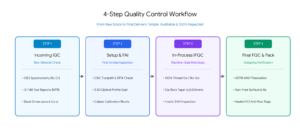
Drawing Submission & DFM Review: Submit 2D drawings (PDF/DWG) and 3D CAD models (STEP/IGES). The engineering team evaluates draft angles, wall thicknesses, and tolerances, providing a quotation within 24 hours.
-
Tooling Fabrication & Prototyping: Dedicated hot forging dies (approx. 15 days) or silica sol casting molds (approx. 30 days) are machined, followed by sample production and CMM dimension verification.
-
Automated Mass Production: High-precision CNC turning cells execute port facing, boring, and single-point threading, supported by automated loading systems.
-
Final Inspection & Global Export: Finished parts undergo ultrasonic cleaning, 100% thread gauge verification, protective cap fitting, and secure international export packaging.
Frequently Asked Questions (FAQ)
What information is required to receive a formal quotation for custom elbow fittings?
Provide your 2D PDF drawing with explicit tolerances, a 3D CAD model (STEP or IGES format), the required alloy grade, target batch quantities, system pressure ratings, and any specific surface finish or packaging requirements.
Should I choose hot forging or silica sol casting for my custom elbow order?
If your project requires high burst pressure resistance (over 6,000 PSI) and rapid tooling turnaround, hot forging with its 15-day tooling lead time is recommended. If your design features complex hollow internal flow passages and you have a 30-day tooling window for long-term production runs, silica sol casting provides significant material and machining savings.
Why is working with a custom-focused factory safer than using a standard-part commodity supplier?
Specialized custom manufacturers employ skilled machinists who regularly maintain tight drawing tolerances down to ±0.01 mm. They perform rigorous upfront DFM evaluations and handle complex tool offsets, preventing hidden defects and high scrap rates during volume production.
Request an Engineered Elbow Fitting Quote
Dealing with spatial envelope constraints, extreme pressure ratings, or complex hybrid thread combinations?
Upload your 2D/3D CAD drawings (STEP, IGES, DXF, or PDF) to receive an engineering DFM evaluation, blank process assessment (hot forging vs. silica sol casting), and a transparent manufacturing quotation within 24 hours.