When manufacturing high-pressure fluid connectors, water heater components, or hydraulic adapters, selecting the right raw material format is critical. Many manufacturers start with cold-drawn seamless tubing or solid bar stock to avoid upfront tooling investments. However, under cyclic thermal stress and fluctuating hydraulic pressure, hidden material flaws can turn into severe field failures.
As a machining engineer with over 15 years on the shop floor managing CNC turning cells, automated robotic lines, and raw blank procurement, I have seen how raw material selection directly impacts part reliability. Here is a real-world manufacturing case study on why shifting from cold-drawn tubing to hot punch forging (red punching) resolved recurring leakage issues, lowered unit costs, and restored a critical OEM client relationship.
1. The Shop-Floor Challenge: Recurring Leakage in Water Heater Fittings
The Original Setup: CNC Machining from Cold-Drawn Seamless Tubing
Several years ago, our facility manufactured custom metal pipe fittings for a major US manufacturer of commercial water heating equipment. The application required an absolute zero-leak seal under continuous thermal expansion and internal water pressure.
To eliminate tooling charges and keep lead times short, the initial manufacturing route relied on cold-drawn seamless tubing turned directly on high-speed CNC lathes. We shipped between 7 and 10 production batches without detecting any dimensional or visual defects during standard in-process inspections.
The Failure Mode: Subsurface Seam Cracks and Material Voids
Every 6 to 12 months, the customer reported field complaints regarding micro-leakages. When failed fittings were cross-sectioned and analyzed under magnification, the root cause became clear:
-
Micro-cracks along drawing lines: The cold-drawing process introduced severe residual tensile stress and longitudinal micro-cracks inside the tube walls.
-
Subsurface material voids: Raw tube stock contained internal material deficiencies (lack of fill/voids) that were invisible on the as-turned outer surface but expanded under dynamic water heating cycles.
During the shifting dynamics of global trade, the client temporarily relocated their supply chain back to domestic US suppliers.
2. Winning Back the Order: Eliminating Cracks with Hot Punch Forging
Three years later, the same client returned to the international market searching for a reliable, defect-free manufacturing partner and re-engaged our team.
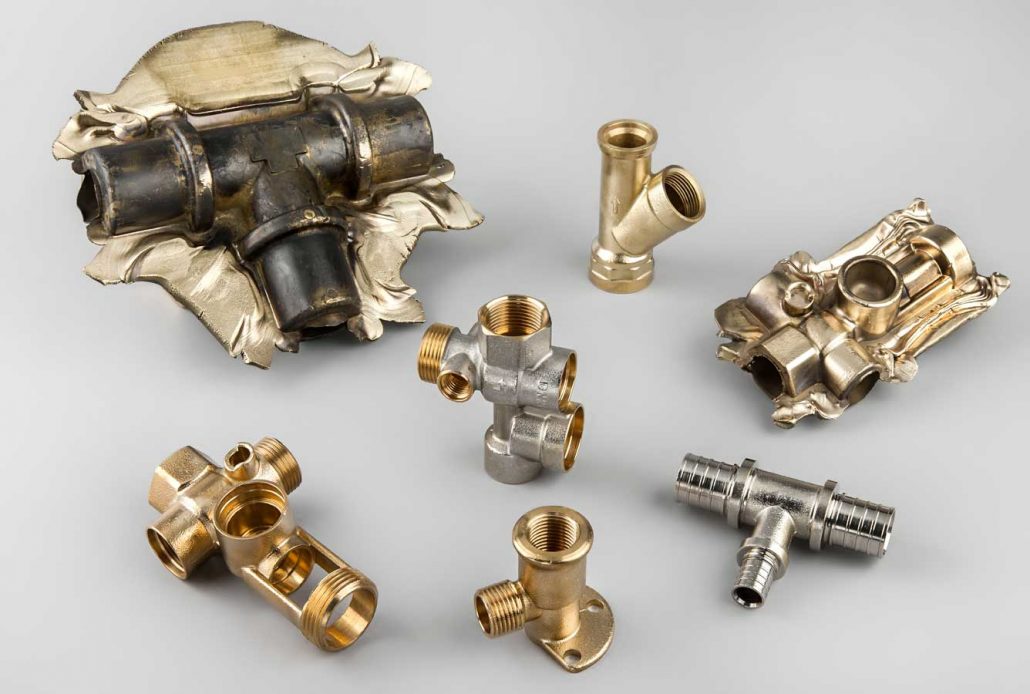
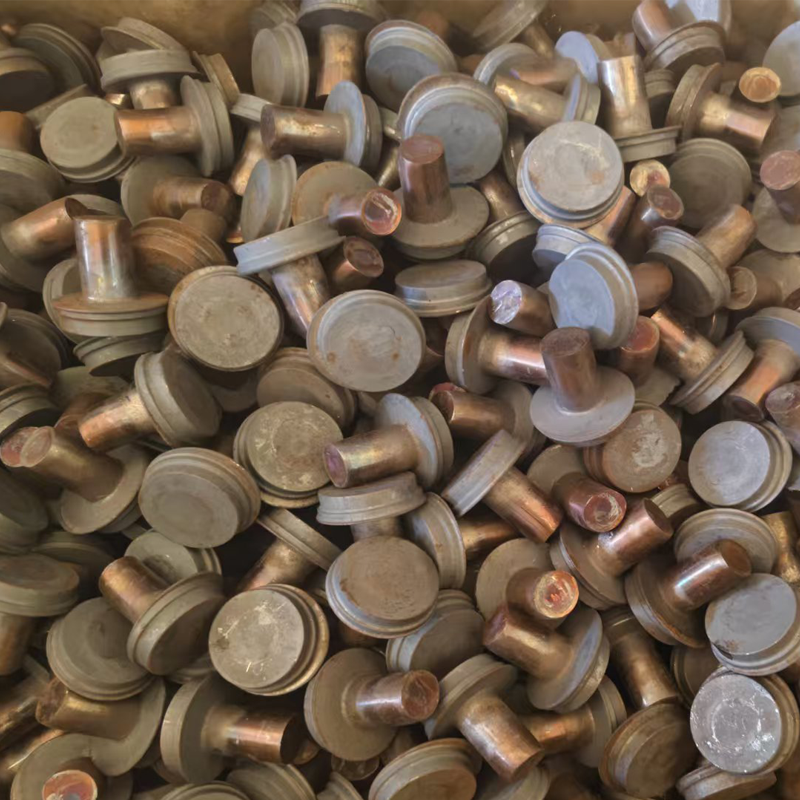
To solve the historical cracking problem permanently, we redesigned the manufacturing route by replacing cold-drawn tube machining with a custom hot punch forged blank (Hot Punch Forging / Closed-Die Red Punching).
[Old Tube Method] Raw Cold-Drawn Tube -> Residual Drawing Stress -> Field Micro-Cracks & Leaks
[Hot Punch Method] Solid Billet Heating -> Closed-Die High Tonnage -> Dense Grain Flow & Zero Cracks
The Engineering Solution
-
Billets were heated via medium-frequency induction to their ideal plastic deformation window (1150°C to 1200°C), relieving all prior drawing stresses.
-
A high-tonnage mechanical press forced a penetrating punch into the closed die cavity, forging the outer hex, stepped shoulders, and pre-formed inner cavity in a single stroke.
-
The continuous metal grain flow closed all subsurface voids and eliminated material delamination.
The Result: Since transitioning to hot punch forged blanks, we have delivered tens of thousands of critical pipe fittings with zero leakage complaints, while reducing the raw material cost per part.
3. Key Advantages of Hot Punch Forged Blanks
1. 100% Elimination of Subsurface Seams and Cracks
Unlike cold-drawn tubing, which is pulled through cold dies under high tension, hot punch forging relies on high-temperature compressive plastic deformation. The intense mechanical tonnage refines the austenitic/ferritic crystal structure, creating uninterrupted grain flow lines that easily withstand pressure surges and thermal cycling.
2. Significant Material Savings and Reduced CNC Cycle Time
Machining heavy fittings from solid bar stock or thick-walled tubing generates excessive chip waste. Hot punch forging pre-forms the external hexagon, steps, and inner cavity directly in the tooling. This eliminates heavy raw-billet sawing costs, reduces chip removal volume by 30% to 50%, and minimizes deep-hole boring cycles on CNC lathes.
3. Accessible Tooling Investment and Low MOQ (3,000 Pcs)
Unlike multi-station cold heading, which requires expensive carbide tooling and order minimums of 50,000+ pieces, hot punch forging uses robust hot-work tool steels (such as H13).
-
Production MOQ: High-quality forged blanks can be cost-effectively produced starting at just 3,000 pieces.
-
Lower Financial Risk: Lower tooling amortisation makes it ideal for mid-volume industrial programs.
4. Engineering Limitations: Geometry and Secondary Machining
While hot punch forging delivers dense internal structures, it has geometric boundaries that manufacturing engineers must plan for during Design for Manufacturability (DFM) reviews:
Best-Fit Geometries: Symmetrical, Hexagonal, and Cylindrical Parts
Hot punch forging is optimized for:
-
Axisymmetric round parts, stepped sleeves, and straight fluid adapters
-
Symmetrical external hex fittings (hex nipples, plugs, heavy union nuts, hose barbs)
-
Straight-axis female/male connectors
Geometry Constraints
-
No Complex Internal Flow Paths: Because rigid metal punches must extract along a straight stroke axis, hot forging cannot form curved internal waterways, multi-way diverter chambers, or internal undercut geometries (these complex shapes require silica sol investment casting instead).
-
Surface Scale Requires CNC Finishing: Blanks exit the forge with a dark oxidation scale and a rougher surface finish (Ra 3.2 to 6.3 μm). Critical sealing faces, O-ring grooves, and precision threads must undergo secondary CNC precision turning.
5. Technical Comparison: Tube Machining vs. Hot Punch Forging vs. Solid Bar Turning
| Comparison Parameter | Cold-Drawn Tubing | Hot Punch Forged Blank | Solid Bar Stock CNC Turning |
| Micro-Crack & Leak Risk | High (Drawing stresses & seams) | Zero (Dense, continuous grain structure) | Low (Homogeneous material) |
| Material Utilization Rate | Moderate (45%–60%) | High (75%–90% near-net shape) | Low (25%–40% on hollow parts) |
| Pre-Formed Geometry | Straight round hollows only | Hexagons, steps, pre-punched bores | Solid cylindrical profiles only |
| Tooling Investment | None ($0) | Low to Moderate ($500–$1,500) | None ($0) |
| Production MOQ Threshold | Low (100–500 pcs) | Accessible (From 3,000 pcs) | Low (10–100 pcs) |
| Dynamic Pressure Rating | Moderate (Risk under thermal cycles) | Highest (Ideal for water heaters & gas) | High |
Summary: When Should You Switch to Hot Punch Forging?
-
Switch from cold-drawn tubing if: Your parts experience fluid pressure, thermal expansion, or vibration, and you need to eliminate subsurface seam splitting and recurring field leaks.
-
Switch from solid bar stock if: Your annual order volume exceeds 3,000 pieces and you want to slash CNC machining cycle times and reduce raw material chip waste.
-
Keep using silica sol casting if: Your component features intricate, non-concentric curved internal waterways or complex diverter geometry that a straight forging punch cannot reach.
Frequently Asked Questions (FAQ)
1. Why do cold-drawn tubes crack over time in water heating and fluid systems?
Cold-drawn tubing inherently contains longitudinal residual stresses created during the cold-drawing operation. When installed in water heaters or high-pressure lines, continuous cycles of thermal expansion, water hammer, and mechanical vibration cause existing micro-seams and subsurface inclusions to propagate into full wall fractures, leading to leakage.
2. Can hot punch forged fittings be used directly without secondary CNC machining?
No. Hot punch forging is a near-net-shape blank manufacturing method. The forged blanks feature a standard forging tolerance (±0.5 mm to ±1.0 mm) and a dark oxide layer. Precision sealing faces, O-ring counterbores, and thread profiles (NPT, BSPP, SAE, Metric) must be turned on secondary precision CNC lathes.
3. What is the typical lead time for new hot punch forging tooling and first samples?
Tooling fabrication using high-strength H13 die steel typically takes 15 to 25 days. Once sample blanks are stamped and evaluated for concentricity and grain structure, first-article CNC machined samples are typically ready for dimensional and pressure testing within 30 days.
Upgrade Your Pipe Fitting Reliability with Precision Forged Blanks
Eliminating fluid leakage and optimizing machining cycle times requires the right blank engineering and precision CNC execution.
Whether you need to resolve micro-cracking issues, lower raw material costs, or scale custom forged steel pipe fittings, our manufacturing facility provides end-to-end engineering support:
-
Extensive Machine Fleet: Over 80 high-precision CNC turning centers, multi-axis live-tooling lathes, and fully automated truss robotic loading systems.
-
Comprehensive Quality Control: 100% pneumatic and hydrostatic leak testing fixtures, 2.5D optical profile projectors, inside groove calipers, and spectrometer material verification.
-
Shop-Floor DFM Expertise: Practical process selection across hot punch forging, silica sol casting, and cold heading to deliver optimal cost-per-part performance.
Have an active drawing or struggling with component cracking?
Send your CAD/PDF drawings and annual volume requirements to our engineering team today to receive a complete DFM assessment, blank optimization plan, and manufacturing quote.