For international procurement managers, mechanical engineers, and piping system designers, choosing the right pipe fitting manufacturer involves balancing dimensional precision, material purity, and lead times against rising capital costs. Over the past decade, overseas buyers have increasingly partnered with a China-based pipe fitting company not just for low unit pricing, but for the fundamental supply chain, machinery, and workforce advantages that define modern precision manufacturing.
Understanding the structural mechanics behind China’s industrial ecosystem helps technical buyers eliminate procurement risks and secure high-performance customized stainless steel pipe fittings.
1. Complete Supply Chains & Raw Material Cost Scale
China produces over 50% of the world’s raw carbon steel and stainless steel. This vast volume gives a domestic pipe fittings manufacturer an immediate cost and agility advantage over overseas competitors:
-
Lower Material Input Costs: Massive domestic production scale minimizes crude steel melting and refining expenses. As a result, raw solid bars, heavy-wall seamless pipes, and forgings are sourced at baseline market rates without international import markups.
-
Instant Resource Availability: Whether your engineering drawings specify standard SS304/SS316, carbon steel, or specialized duplex alloys, local supply clusters allow a pipe fitting company to procure raw materials in hours rather than waiting weeks for international shipments.
-
Streamlined Local Processing: From rough forging to heat treatment and surface passivation, the entire production loop occurs within dense industrial hubs, lowering total manufacturing costs.
2. Modern Multi-Axis CNC Equipment & Lower Capital Expenditure
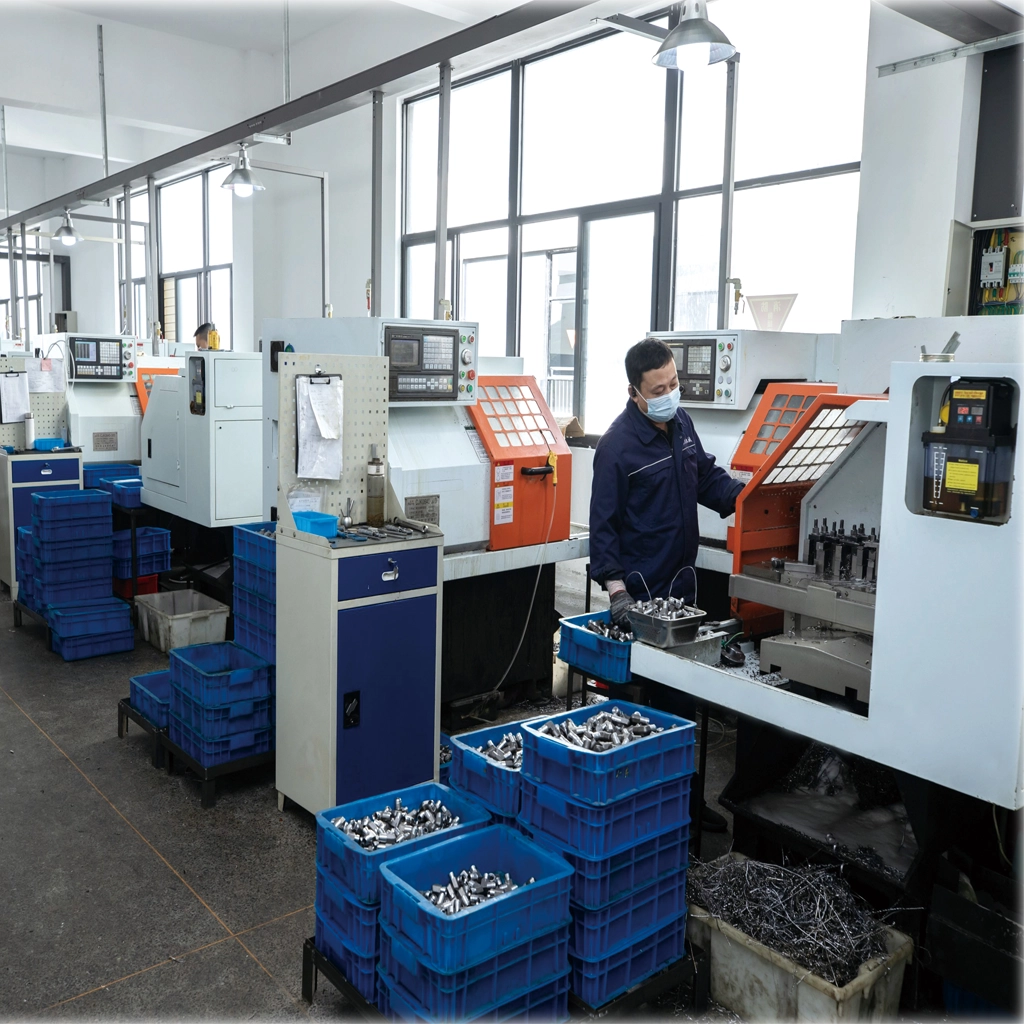
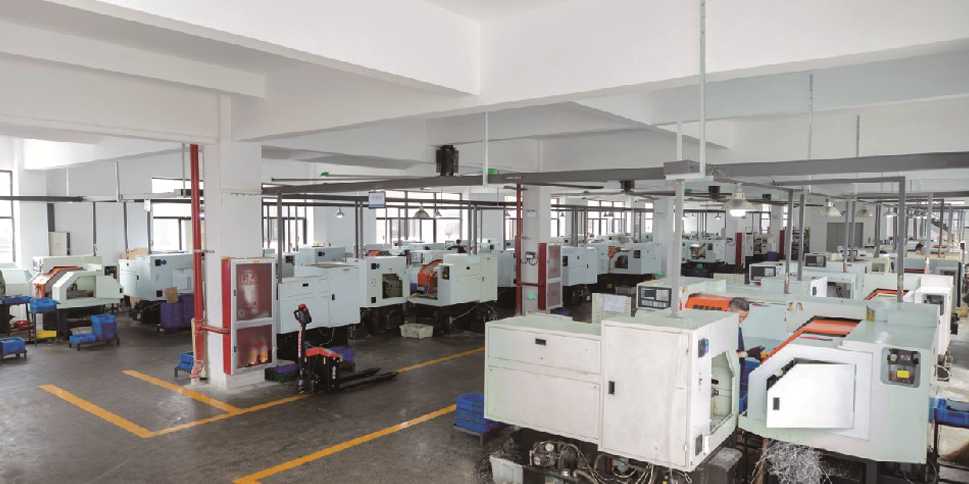
In high-precision CNC turning, fixed machine investment directly impacts per-part unit pricing. Chinese machinery manufacturers now produce multi-axis CNC lathes, Swiss-type turning centers, and automated truss robots that match Western precision at a fraction of the capital cost.
When a leading pipe fittings manufacturers hub invests in machinery, the price difference between domestic and imported equipment is substantial:
-
High-Precision CNC Turning Centers: A high-end Japanese or European 3-axis CNC turning lathe typically costs between 120,000 USD and 200,000 USD. In contrast, an equivalent high-precision Chinese CNC lathe with micrometer-level accuracy (tolerances within ±0.01 mm) costs between 35,000 USD and 60,000 USD—a 50% to 70% reduction in capital investment.
-
Automated Swiss-Type Lathes: Importing a German or Japanese Swiss-type lathe for small-diameter turning can exceed 250,000 USD, whereas top-tier domestic equivalents cost around 80,000 USD to 120,000 USD.
-
Lower Overhead & Depreciation: Reduced machinery acquisition costs mean a Chinese pipe fitting manufacturer carries significantly lower machine depreciation expenses per hour. These savings are passed directly to buyers without sacrificing dimensional tolerances or surface finish (Ra ≤ 0.8 μm).
3. High-Quality Workforce & Strict Quality Control Standards
A common misconception among overseas buyers is that cost savings stem from cheap, unskilled labor. In modern precision machining, low-cost labor without technical training results in high scrap rates.
China’s manufacturing advantage lies in its vast pool of educated, quality-conscious industrial workers:
-
Strong Educational Foundation: The vast majority of machine operators and quality control technicians possess junior high school education or higher, enabling them to easily interpret complex 2D CAD engineering drawings, geometric tolerances, and technical SOPs.
-
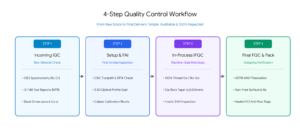
Ingrained Quality Awareness: Operators understand critical manufacturing concepts, such as thread pitch tolerances, chamfer angles, and surface roughness. They routinely execute First Article Inspections (FAI) and in-process checks using Go/No-Go thread gauges, optical profile projectors, and CMM equipment.
-
Reduced Defect Rates: Educated workers reduce human error during CNC tool setting and offset adjustments, keeping factory scrap rates low and ensuring batch-to-batch consistency for pipes and fittings manufacturers.
4. Dual-Engine Speed: Fast Prototyping & Agile Mass Production
When you evaluate different pipe fitting companies, delivery speed is as vital as pricing. Combining instant raw material availability, low-depreciation automated equipment, and skilled machine operators creates a flexible manufacturing workflow:
-
7-to-10 Day Sample Turnaround: Direct access to local raw material stock allows rapid prototype sampling for custom turned fittings.
-
High-Volume Scalability: Flexible shop floor arrangements and automated truss robots allow factories to ramp up from small trial batches to full container orders efficiently.
Quality Assurance & Material Verification Standards
Reputable pipes and fittings manufacturers implement rigorous Quality Assurance (QA) protocols to guarantee that lower production costs never compromise engineering integrity:
-
Material Test Reports (MTR): Full heat-number traceability backed by EN 10204 3.1 certificates.
-
Positive Material Identification (PMI): On-site verification of chemical compositions (such as Chromium, Nickel, and Molybdenum content) using handheld XRF spectrometers.
-
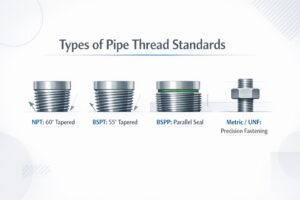
Thread & Pressure Verification: 100% inspection of NPT, BSPP, BSPT, and Metric threads using calibrated thread gauges and hydrostatic pressure testing.
Frequently Asked Questions (FAQ)
Q1: How do Chinese pipe fitting manufacturers maintain low prices without sacrificing quality?
A: Cost advantages are driven by raw material economies of scale, dense local supply chains, 50% to 70% lower equipment capital expenditure, and low factory depreciation—not by using inferior materials or skipping quality control.
Q2: Can a domestic Chinese CNC lathe achieve the same tolerances as European machinery?
A: Yes. Modern multi-axis domestic CNC lathes and automated turning centers routinely maintain tight dimensional tolerances within ±0.01 mm and smooth surface finishes down to Ra ≤ 0.8 μm.
Q3: What quality documentation should I request from a pipe fitting company before placing a bulk order?
A: Always request a Material Test Report (MTR / 3.1 Certificate), dimensional inspection sheets, surface roughness test data, and PMI chemical composition readouts.
Partner with a Leading Precision Pipe Fitting Manufacturer
Leverage complete supply chain integration, advanced CNC turning technology, and skilled engineering support for your next piping project.
Whether you need standard fittings or complex customized stainless steel pipe fittings, our engineering team is ready to assist. Submit your 2D/3D CAD drawings or technical specifications today, and receive a comprehensive DFM evaluation and quote within 24 hours!